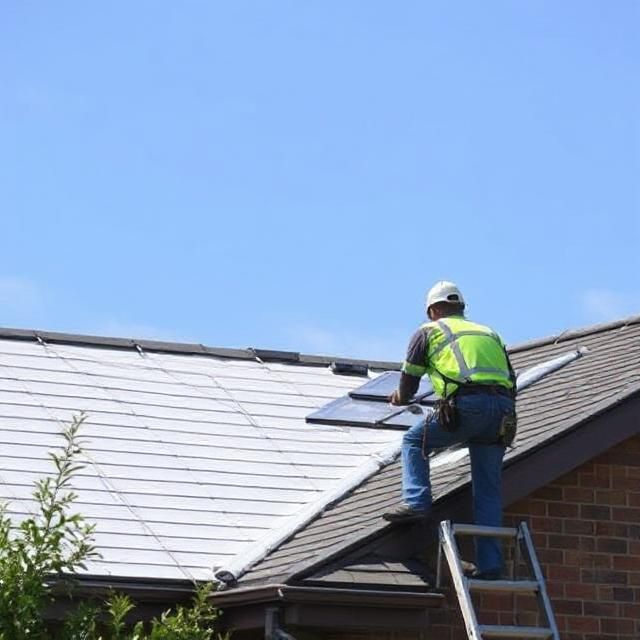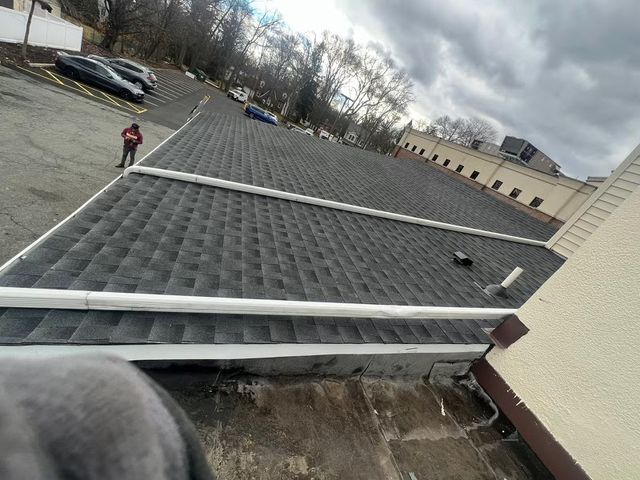
Can Clogged Gutters Damage Your Roof? A Fall Guide for NJ
Yes, clogged gutters can rot your roof edge, fascia and decking and set up winter ice dams. Here's what NJ homeowners should check this fall and when to call.
ARAmerican Roofing Pros··6 min read

Yes, clogged gutters can damage your roof, and late fall in New Jersey is when it happens most. When leaves and shingle grit pack a gutter, rainwater backs up against the roof edge, soaks the fascia board and the first few feet of roof decking, and sets the stage for ice dams once temperatures drop. The fix is usually simple if you catch it early, and expensive if you don't.
Below, we explain exactly how a blocked gutter hurts a roof, the warning signs to look for this time of year, and when a gutter problem has turned into a roofing problem.
How Clogged Gutters Actually Damage a Roof
Gutters have one job: carry water off the roof and away from the house. When they can't drain, that water has to go somewhere, and it usually goes where it does the most harm.
Water backs up under the shingles
A full gutter lets water pool right at the drip edge. During a heavy rain, that standing water can wick up under the first course of shingles and the starter strip. Shingles are designed to shed water downhill, not to hold back a pool of it, so moisture reaches the roof deck underneath.
Fascia and roof deck rot
The fascia board the gutter hangs on stays wet for days after every storm. Over a season or two, wood fascia softens and rots, and that rot often spreads into the bottom edge of the plywood roof deck and the rafter tails. Once the deck edge is soft, nails stop holding and shingles at the eave start to lift or sag.
Ice dams in winter
This is the big one for New Jersey. A gutter packed with wet leaves freezes solid in December and January. Snowmelt running down the roof hits that frozen block, refreezes at the edge and builds an ice dam. Water then backs up behind the ice and leaks into soffits, exterior walls and ceilings. We cover the full picture in our post on how to prevent ice dams on your NJ roof, but clean gutters are one of the easiest first steps.
Weight and loose gutters
A 30-foot run of gutter full of wet leaves and ice can weigh a few hundred pounds. That load pulls hangers loose, bends the gutter away from the house and can tear the drip edge and the shingle edge with it. Overflow also spills onto lower roofs, porches and foundations, causing damage well beyond the roof itself.
Why Late October and November Matter So Much in NJ
Many New Jersey neighborhoods are full of mature oaks, maples and pin oaks, and most of them drop their leaves between mid-October and early December. Oaks are especially stubborn, often holding leaves into late November. If you clean your gutters in early October, there is a good chance they will be full again by Thanksgiving.
That timing collides with nor'easter season and the first hard freezes. In wooded areas of Bergen County, Morris County and other heavily treed parts of the state, we regularly see gutters that were cleaned once in early fall completely packed again before the first snow.
A practical schedule for most NJ homes:
- Late spring: clear out seed pods, pollen buildup and shingle granules.
- Late November to early December: a thorough cleaning after most leaves are down.
- Extra cleanings: homes with overhanging trees may need a mid-fall pass as well.
Warning Signs Your Gutters Are Hurting Your Roof
You don't have to climb a ladder to spot most of these. Walk around the house during or right after a steady rain and look for:
- Water spilling over the front of the gutter instead of coming out the downspout
- Plants, moss or small seedlings growing in the gutter
- Gutters sagging, pulling away from the fascia or sloping the wrong way
- Peeling paint, dark stains or soft spots on fascia boards and soffits
- Shingles at the eave that look wavy, curled or lifted
- Stains on the ceiling or walls near exterior corners, especially upstairs
- Water stains or damp insulation along the edges of the attic floor
- Washed-out mulch, eroded soil or a damp basement wall below a gutter
Also pay attention to what comes out of the downspouts. Heavy amounts of dark, sand-like granules mean your shingles are shedding their protective coating, which is a sign of aging that deserves a closer look.
Gutter Problem or Roof Problem? How to Tell
If the gutter is simply full and the fascia is solid, cleaning it and checking that downspouts flow freely may be all you need. The situation changes when water has already been backing up for a season or more.
Signs it has become a roofing issue include soft or spongy wood when you press the fascia, shingles at the edge that move or crumble, missing or rusted drip edge, and any staining inside the house. At that point, cleaning the gutter will stop new damage but won't fix the rot that is already there.
Typical repairs we see from long-term gutter overflow, with rough New Jersey price ranges:
- Fascia board replacement: roughly $400 to $1,500 depending on length, height and whether it's wrapped in aluminum
- Eave decking and shingle repair: often $500 to $2,000 for a localized section
- Drip edge and ice and water shield at the eaves: usually handled as part of an edge repair or a full replacement
- Interior drywall and insulation damage: varies widely depending on how long the leak went unnoticed
These ranges vary based on roof height and pitch, the materials involved and how far the rot has spread. A proper roof repair addresses the wood first, then reinstalls ice and water shield, drip edge and shingles so the edge is sealed correctly.
Gutter Guards: Worth It in New Jersey?
Gutter guards can cut down on cleaning, especially under oaks and maples, but they are not a set-it-and-forget-it fix. Here is how the common options compare:
- Screens and mesh: affordable and effective against large leaves, but fine debris like pine needles and maple seeds can still collect on top.
- Micro-mesh: blocks most debris including shingle grit; needs an occasional brush-off and works best on properly pitched gutters.
- Reverse-curve or surface-tension covers: shed leaves well but can overflow in very heavy rain and may be visible from the street.
One caution: guards should never be slid under the first row of shingles in a way that lifts them or breaks the seal. Improperly installed guards can void shingle warranties and actually cause leaks at the edge. If you're adding guards, make sure the installer attaches them to the gutter or fascia without disturbing the roof.
Safe Fall Gutter Care for Homeowners
Cleaning gutters on a one-story ranch is a reasonable DIY job. On two-story colonials, steep roofs or slate and older shingles, it's safer to hire help. If you do it yourself:
- Use a sturdy extension ladder with a stabilizer, and have someone hold it.
- Scoop debris by hand or with a gutter scoop rather than walking on the roof.
- Flush each run with a hose and confirm water exits every downspout freely.
- Check that downspout extensions carry water at least 4 to 6 feet from the foundation.
- Look closely at the fascia, drip edge and first row of shingles while you're up there, and take photos of anything that looks soft, stained or loose.
Never use a pressure washer on shingles to clean them; it strips granules and shortens roof life. And if your gutters keep overflowing even when clean, they may be undersized or poorly pitched for your roof area.
Next Steps Before Winter
If your gutters have been overflowing, your fascia looks stained, or you've noticed shingles lifting at the eave, now is the time to get it checked, before freeze-thaw cycles and ice dams turn a small edge repair into an interior leak. A pre-winter roof inspection will show whether your roof edge, decking and flashing are sound.
As a GAF Master Elite® contractor serving all of New Jersey, American Roofing Pros provides free estimates with photos and a written, itemized price, so you can see exactly what we found. Call us at (877) 228-1042 or request your free estimate today.