Roof Repair NJ: 7 Proven Tips to Avoid Costly Damage
Roof repair NJ homeowners trust: discover 7 proven tips, warning signs and safety standards from American Roof Repair & Replacement. Call today!
ARAmerican Roofing Pros··10 min read
Roof repair NJ homeowners rely on must do more than patch a leak. It has to protect your family, your property value, and your peace of mind through every New Jersey season. From humid summers to nor’easters and heavy winter snow, roofs across the Garden State take a beating.
That is why professional roof repair NJ residents can trust starts with careful inspection, safe working practices, and quality materials.
In this guide, American Roof Repair & Replacement shares seven proven tips, practical safety insights, and expert advice to help you avoid costly damage. Whether you notice a small ceiling stain or you are planning a larger project, you will learn what to look for and how to act.
Why Roof Repair NJ Homeowners Prioritize Matters
Your roof is the first line of defense for your home. It shields the structure, insulation, and interior from rain, snow, wind, and sun. When it fails, the damage rarely stays on the roof.
Water finds its way into attics, walls, and ceilings. Moisture then feeds mold and weakens wood framing. Insulation soaks up water and stops working. Energy bills climb, and repair costs multiply.
Timely roof repair NJ property owners schedule early is almost always cheaper than emergency work. A few damaged shingles or a failing flashing detail can be corrected in a single visit. Ignored for a season or two, the same problem can lead to rotted decking and interior damage.
Early repair also protects your home’s value. Buyers and appraisers pay close attention to roof condition. A well-maintained roof supports resale value and avoids last-minute negotiations during a sale.
What Professional Roof Work Looks Like
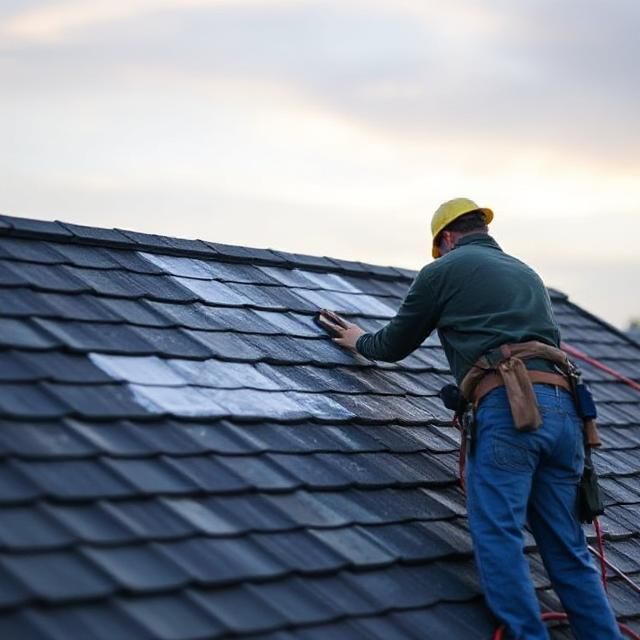
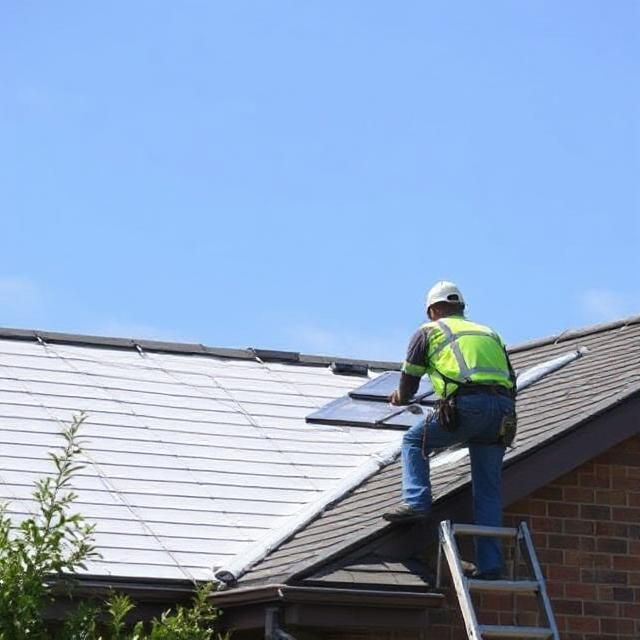
The photo featured in this article shows what a safe job site looks like. A technician wearing a white hard hat and a high-visibility vest works at the edge of a roof. He is secured with a tool belt and reaches the roof by a ladder placed against a brick home.
Several details here reflect professional standards.
Proper protective gear. The hard hat and reflective vest keep the worker protected and visible. These are basic requirements on any reputable roofing crew.
Safe access. A ladder set at a stable angle gives controlled access to the roof edge. Professionals check ladder placement before every climb.
Different roofing surfaces. The image shows a lighter-toned section beside a darker shingled slope. Roofs often combine several materials, such as shingles, underlayment, flashing, and metal edge components. Each one needs its own installation method.
Clear conditions. Good weather makes roof repair NJ crews safer and more accurate. Dry surfaces improve grip and help sealants and adhesives perform correctly.
Work like this is planned, careful, and methodical. It is not improvised. When you hire a roofer, these are the signs of quality you should expect to see.
7 Warning Signs You Need Roof Repair NJ Experts
Many roof problems start small and quiet. Knowing the warning signs helps you call a professional before the damage spreads. Here are the seven most important ones.
1. Missing, Cracked, or Curling Shingles
Shingles protect the layers underneath. When they crack, curl, or blow off, water can reach the underlayment and decking. After a storm, check your yard and gutters for shingle pieces.
2. Water Stains on Ceilings or Walls
Brown or yellow stains on a ceiling often point to a slow leak. Stains may appear far from the actual source, because water travels along rafters before it drips. A professional can trace the leak to its origin.
3. Granules in the Gutters
Asphalt shingles shed small granules as they age. A little is normal. Heavy buildup in gutters or at downspouts suggests shingles are wearing out and losing their protection against UV rays.
4. Sagging Areas on the Roof
A sagging section can signal trapped moisture or structural weakness. This is a serious warning. Contact a roof repair NJ specialist right away if you notice any dip in the roofline.
5. Damaged or Rusted Flashing
Flashing seals joints around chimneys, vents, skylights, and valleys. Cracked sealant, rust, or loose metal lets water in. Flashing failures are among the most common causes of roof leaks.
6. Daylight in the Attic
Go into your attic on a bright day and turn off the lights. Any beam of light coming through the roof boards shows a gap where water can enter as well.
7. Rising Energy Bills
Poor insulation and ventilation often accompany roof damage. If your heating and cooling costs keep growing without explanation, the roof system may be part of the problem.
If you spot any of these signs, schedule an inspection promptly. Quick action keeps roof repair NJ projects small and affordable.
Safety Standards in Professional Roof Repair
Roofing is one of the most hazardous trades in construction. Falls are a leading cause of serious injury on job sites, which is why safety is central to every responsible contractor’s process. The OSHA fall protection resources explain the standards that apply to work at height.
Professional crews typically follow practices like these:
- Inspecting ladders, harnesses, and equipment before each job
- Wearing hard hats, high-visibility clothing, and non-slip footwear
- Using fall protection when working on steep or high roofs
- Avoiding work during rain, ice, strong wind, or lightning
- Keeping the work area clear of debris and tools
Homeowners should never attempt major roof repair NJ projects on their own. Climbing onto a roof without training and equipment puts you at serious risk. A small savings is never worth an injury.
A contractor who takes safety seriously usually takes quality seriously as well. Watch how a crew behaves on site. The details tell you a great deal.
Roof Repair vs. Roof Replacement
One of the most common questions homeowners ask is whether to repair or replace. The honest answer depends on the roof’s age, condition, and the extent of damage.
Repair is often the right choice when:
- Damage is limited to one area or a few shingles
- The roof is relatively young, often under 15 years old
- The underlying decking is dry and sound
- The problem is a single flashing or sealant failure
Replacement may be the better option when:
- Leaks keep returning in several places
- Shingles are curling or losing granules across the roof
- The roof is near the end of its typical service life
- Decking is rotted or the structure is compromised
Asphalt shingle roofs often last roughly 20 to 30 years, depending on materials, ventilation, and climate. Patching an old roof again and again can cost more over time than a new system.
A trustworthy contractor will explain both options honestly. Quality roof repair NJ providers do not push replacement when a repair will do the job. If you want to compare, see our roof replacement services for more detail.
How New Jersey Weather Affects Your Roof
New Jersey has a demanding climate. Roofs face four very different seasons, and each one brings its own risks.
Winter. Snow and ice add weight and can form ice dams along the eaves. Ice dams force melting water under shingles. Repeated freezing and thawing also widens small cracks.
Spring. Heavy rain tests every seal and flashing joint. Spring is a good time to inspect for winter damage.
Summer. Heat and UV exposure age shingles and dry out sealants. Poor attic ventilation traps heat and shortens roof life.
Fall. Falling leaves clog gutters and valleys. Trapped water and debris can lead to rot along the roof edge.
Coastal storms and strong winds can also lift shingles in any season. After a severe storm, a quick inspection is wise, even if you see no obvious leaks.
Because of this, seasonal roof repair NJ planning matters. Many homeowners schedule an inspection each spring and fall. The Energy Star roof products guide also explains how reflective roofing can help manage heat.
The Professional Roof Repair NJ Process
Knowing what to expect helps you feel confident about hiring a contractor. A professional process usually follows these steps.
Step 1: Inspection and Assessment
The crew examines the roof surface, flashing, vents, gutters, and attic. They look for the true source of the problem, not just the visible symptom.
Step 2: Clear Written Estimate
You should receive a detailed estimate describing the scope of work, materials, timeline, and cost. Be cautious of vague or verbal-only quotes.
Step 3: Preparation and Protection
Before work begins, the team protects landscaping, siding, and walkways. They set up ladders and safety equipment, as shown in the photo above.
Step 4: Repair Work
Technicians remove damaged materials and replace them with matching products. They renew flashing, sealants, and underlayment where needed. Careful work at this stage determines how long the repair lasts.
Step 5: Cleanup and Final Inspection
A good crew cleans the property, removes debris, and checks nails and fasteners with a magnet sweep. A final review confirms the repair meets quality standards.
Each step in a well-run roof repair NJ project is documented and explained. You should never feel left in the dark.
How to Choose a Roof Repair NJ Contractor
The contractor you choose matters as much as the materials. Use these checks before you sign anything.
Verify registration and insurance. New Jersey requires home improvement contractors to be registered. You can check details through the NJ Division of Consumer Affairs. Ask for proof of liability insurance and workers’ compensation coverage.
Look for local experience. A contractor who knows New Jersey weather and building conditions makes better decisions.
Read reviews and ask for references. Consistent feedback over time is a strong sign of reliable service.
Compare written estimates. The lowest price is not always the best value. Compare scope, materials, and warranty terms.
Ask about warranties. Reliable providers stand behind both materials and workmanship.
Check professional standards. Industry resources such as the National Roofing Contractors Association offer guidance on good roofing practices.
Choosing carefully makes roof repair NJ results last longer and protects you from unpleasant surprises.
What Affects the Cost of Roof Repair
No two roofs are the same, so costs vary. Understanding the main factors helps you plan.
- Extent of damage: A few shingles cost far less than a large leak area.
- Roof material: Asphalt, metal, slate, and flat roofs all have different material and labor costs.
- Roof pitch and height: Steeper and taller roofs require more safety equipment and time.
- Accessibility: Difficult access can raise labor needs.
- Hidden damage: Rotted decking or insulation found during repair adds to the scope.
- Permits and local requirements: Some projects require permits.
A thorough inspection gives the most accurate picture. Honest roof repair NJ estimates explain where the money goes and why. Ask questions until you understand every line.
Maintenance Tips to Extend Roof Life
Regular care can add years to your roof and reduce the need for emergency repairs.
- Schedule inspections twice a year, in spring and fall.
- Keep gutters clean so water drains freely.
- Trim overhanging branches that scrape shingles or drop debris.
- Check attic ventilation and insulation to control heat and moisture.
- Remove moss and debris gently, without harsh pressure washing.
- Inspect after major storms for lifted or missing shingles.
These habits cost little and keep small problems from growing. Combined with timely roof repair NJ service, they protect your investment for the long term.
Why Choose American Roof Repair & Replacement
At American Roof Repair & Replacement, we treat every roof as if it were our own. Our approach is built on honest assessments, safe job sites, and quality workmanship.
Here is what homeowners can expect from us:
- Clear communication from first call to final inspection
- Safety-first crews equipped with proper protective gear
- Quality materials suited to New Jersey weather
- Transparent estimates with no hidden surprises
- Respect for your property during and after the job
Our team handles leaks, storm damage, flashing problems, shingle replacement, and full roof systems. When you need dependable roof repair NJ families can rely on, we are ready to help.
Explore all of our roofing services or contact our team to schedule an inspection.
Frequently Asked Questions
How often should I inspect my roof?
Inspect your roof at least twice a year, and after any major storm. A professional inspection every few years is also wise.
Can a small leak wait?
It is risky to wait. Even a small leak can damage insulation, framing, and ceilings over time. Early roof repair NJ service usually costs much less.
How long does a typical repair take?
Many minor repairs take only a few hours to a day. Larger repairs depend on the extent of damage and the weather.
Does homeowners insurance cover roof damage?
Coverage depends on your policy and the cause of damage. Storm damage is often covered, while wear and age usually are not. Review your policy or ask your insurer.
What is the best time of year for roof repair?
Repairs can be done year-round, but dry, mild weather is ideal. Emergency leaks should be addressed immediately in any season.
Final Thoughts
Your roof works hard every day, and it deserves attention before problems become expensive. Watch for the warning signs, schedule regular inspections, and choose a contractor who values safety and quality.
Reliable roof repair NJ homeowners can count on protects your home, your family, and your budget. If you have noticed any of the signs in this guide, do not wait for the next storm.