Ice and Water Shield: Where Your NJ Roof Really Needs It
Ice and water shield protects the weak spots of a roof from ice dams and wind-driven rain. Here's where NJ roofs need it, what it costs, and when to upgrade.
ARAmerican Roofing Pros··6 min read
On a New Jersey home, ice and water shield belongs at the eaves, in every valley, and around chimneys, skylights, walls and other penetrations. Low-slope sections should get it too. Some homeowners, especially near the shore or on complicated roofs, choose to cover the entire deck. It is not a substitute for good shingles or proper ventilation. It is the backup layer that keeps water out when ice dams or wind-driven rain push past the shingles.
With November around the corner and the first freeze not far off, this is a good time to understand what is under your shingles. That matters most if you are planning a replacement and comparing quotes.
What Ice and Water Shield Actually Is
Ice and water shield is a self-adhered waterproofing membrane. It is usually rubberized asphalt with a sticky back that bonds directly to the roof deck. Roofers often call it "ice and water" or "leak barrier," and GAF sells it under names like WeatherWatch and StormGuard.
Standard underlayment, whether felt or synthetic, sheds water but does not seal. Ice and water shield does, which is why it gets its own place in the roof system. When a nail goes through it, the membrane seals tightly around the shank. That self-sealing quality is what makes it so useful at the spots where leaks usually start.
Where NJ Roofs Need It Most
Most leaks we see don't come through the middle of a shingle field. They start at edges, transitions and openings. That is where ice and water shield earns its keep:
- Eaves (the lower roof edge): This is the ice dam zone. Snow melts over the warm attic, refreezes at the cold overhang, and backs water up under the shingles. The membrane should run from the edge to at least 24 inches inside the exterior wall line. On many NJ homes that takes two courses.
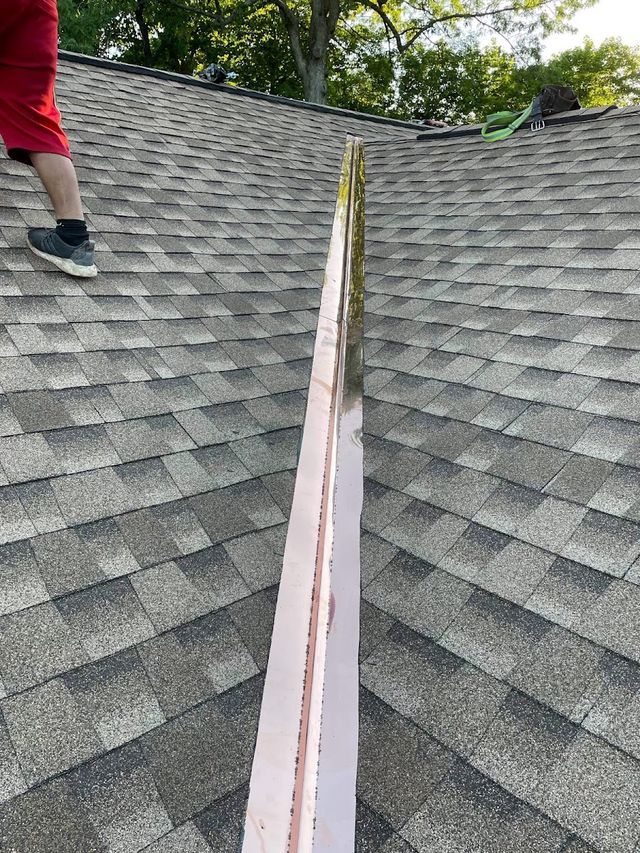
- Valleys: Two roof planes dump water into one channel. A full-width strip centered in the valley is standard practice.
- Chimneys and skylights: Flashing does the main work, but a membrane underneath gives a second line of defense if a sealant joint or counterflashing fails.
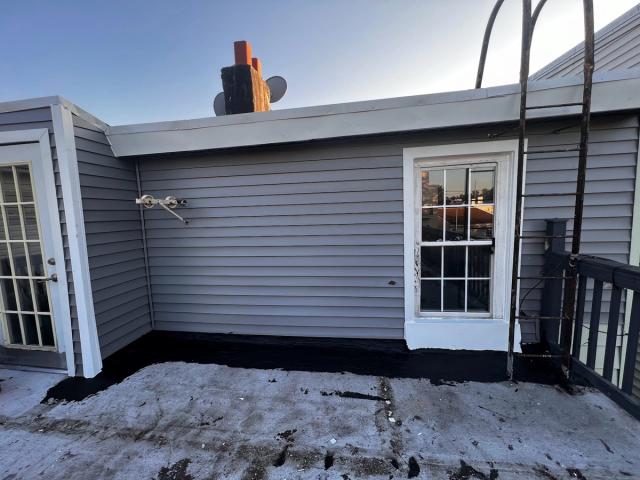
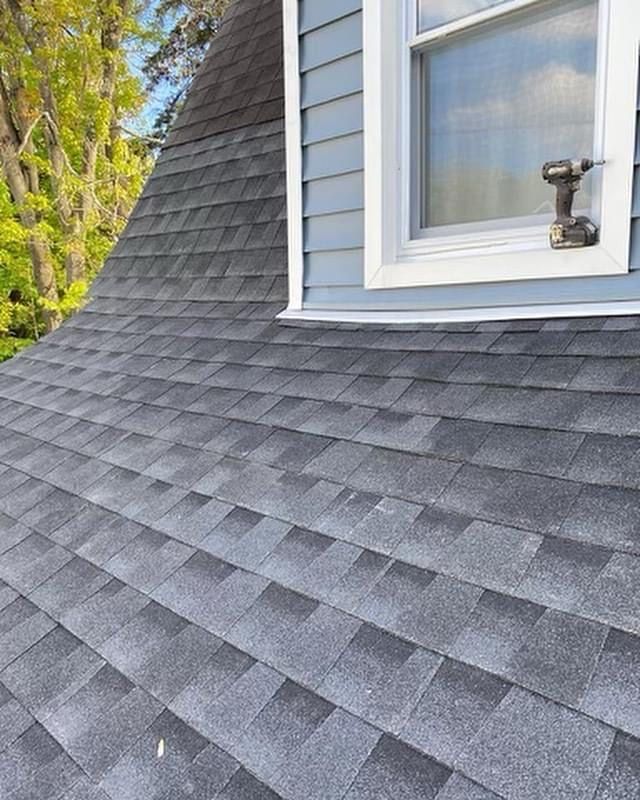
- Roof-to-wall transitions: Dormers, second-story walls and porch roofs that tie into siding are common leak points during wind-driven rain.
- Plumbing stacks and vents: A patch of membrane around each penetration adds cheap insurance.
- Low-slope sections: Shallow areas such as porch roofs or additions drain slowly, so water has more time to find a way in.
If you want the full picture on why eaves are so vulnerable in our winters, our guide on how to prevent ice dams on NJ roofs explains what causes them and how to stop them at the source.
Is It Required by Code in New Jersey?
New Jersey's residential building code is based on the International Residential Code. That code calls for an ice barrier at the eaves in areas with a history of ice forming along the roof edge. Local building officials decide whether that applies in their town. Across most of New Jersey, especially the northern and inland counties, eave protection is expected on a full replacement.
Manufacturer requirements matter too. Enhanced shingle warranties from GAF, for example, are built around a complete system of matching components, and leak barrier is part of that system. If a contractor skips it to shave a few hundred dollars off the price, you may lose more than a little waterproofing. Ask how the warranty will be registered and what accessories it requires.
Full-Deck Coverage: When Is It Worth It?
Some homeowners ask us to cover the whole roof deck with ice and water shield instead of using synthetic underlayment over the main field. It isn't necessary on every house, but it can make sense in a few situations:
- Shore towns where nor'easters and tropical storms drive rain sideways for hours
- Roofs with many valleys, dormers and intersecting planes, where the "edges" add up to most of the roof
- Low-pitch roofs that sit right at the minimum slope for shingles
- Homes with a history of ice dams that can't fully be solved with insulation and ventilation
As a rough guide, upgrading from standard eave-and-valley protection to full coverage often adds somewhere around $1,500 to $4,000 on a typical single-family NJ home. The real number depends on roof size, pitch, how cut-up the roof is, and current material prices. On a simple ranch in an inland town, the extra cost may not buy much. On a steep, complex roof in Ocean or Monmouth County, it can be money well spent.
The Ventilation Catch
Ice and water shield is essentially a vapor barrier. Covering the entire deck with it means moisture rising from the house can't escape through the sheathing at all. That makes proper attic ventilation even more important. In a poorly vented attic, full coverage can trap condensation against the underside of the deck. We always look at intake and exhaust before recommending a full-deck upgrade.
Common Mistakes to Watch For
A good membrane installed badly won't do its job. These are the problems that show up most often when we tear off older roofs:
- Stopping short at the eaves: One narrow course that doesn't reach past the interior wall line leaves the worst ice dam zone exposed.
- Wrong lap direction: Upper courses must overlap lower ones like shingles, or water gets funneled underneath.
- Covering the ridge vent slot: The membrane must be cut back so the attic can still exhaust air.
- Installing on a wet or dirty deck: It needs a clean, dry surface to bond properly.
- Ignoring temperature limits: Most membranes list a minimum application temperature, often in the 40s Fahrenheit. In a cold snap, good crews warm the material or schedule around the weather.
- Skipping it on a "budget" quote: Some low bids leave it out or limit it to the bare minimum without saying so.
Can You Add It Without Replacing the Roof?
Not across the whole roof. The membrane goes directly on the deck, so the shingles above it have to come off. It can be added during targeted roof repairs such as rebuilding a leaking valley, reflashing a chimney, or redoing a section of eave that has suffered ice dam damage. Those repairs cost far less than a full replacement and can solve a recurring winter leak.
If your roof is already near the end of its life, the better move is usually to plan a roof replacement with the right protection built in from the start. As a GAF Master Elite® contractor, American Roofing Pros installs leak barrier at the eaves, valleys and penetrations as part of a complete roof system, and we'll tell you honestly whether full coverage is worth it on your house.
Questions to Ask on Your Estimate
Ice and water shield is easy to overlook because you'll never see it once the shingles are on. When you review quotes, ask each contractor:
- How far up from the eaves will the ice and water shield run?
- Is it included in all valleys and around every chimney, skylight and wall?
- What brand is it, and does it match the shingle manufacturer's warranty requirements?
- What goes on the rest of the deck, and is full coverage an option?
For more on reading bids side by side, see our guide on how to compare roof replacement estimates in NJ.
Next Steps
If you're not sure what's under your shingles, or you've had a leak near the roof edge in past winters, now is the time to find out, before the snow arrives. American Roofing Pros provides free estimates with photos and a written, itemized price, so you can see exactly where your roof is protected and where it isn't.
Call us at (877) 228-1042 or request your free estimate today.