Does a New Roof Need New Plywood? A Guide for NJ Homes
Most NJ roof replacements need only a few sheets of new plywood, but some need a full redeck. Learn the warning signs, typical costs and what to ask your roofer.
ARAmerican Roofing Pros··5 min read
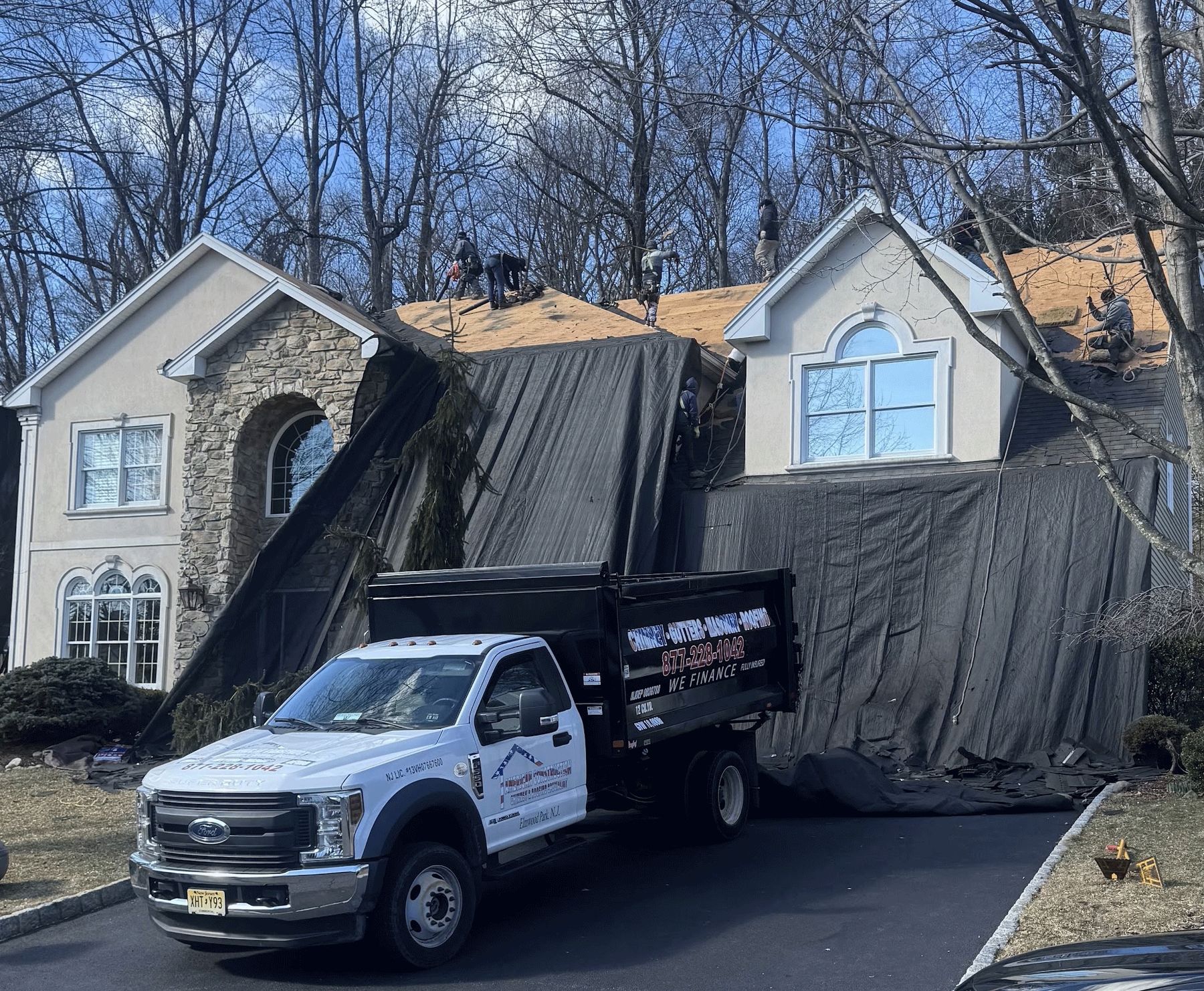
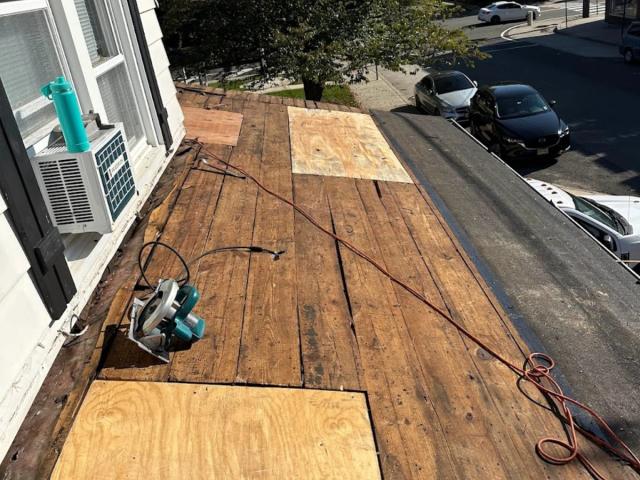
Usually, no. Most New Jersey roof replacements reuse the existing plywood or OSB decking and swap out only a handful of damaged sheets, often somewhere between zero and five on a typical house. A full redeck is needed when the wood is widely rotted, delaminated or sagging, or when an older home has plank boards with gaps too wide for modern shingles to be installed over properly.
Because nobody can see the decking until the old shingles come off, this is one of the most common surprises on a replacement estimate. Here is how to know what to expect, what it typically costs, and how to make sure you are treated fairly.
What Roof Decking Is and Why It Matters
The decking (also called sheathing) is the layer of wood nailed to your rafters. Everything else sits on top of it: the ice and water shield, the underlayment, the shingles and the flashing. Shingle nails need solid wood to grip, so a weak deck means shingles that loosen, lift in wind and leak.
Most NJ homes have one of three types of decking:
- Plywood: Common on homes built from the 1960s through the 1990s. Typically 1/2 inch thick, sometimes 5/8 inch on roofs with wider rafter spacing.
- OSB (oriented strand board): The standard on most newer construction and replacements today, usually 7/16 inch. Strong and consistent, but it swells and weakens if it stays wet for long periods.
- Plank boards: Found on many older homes in towns throughout Bergen, Essex, Union and Hudson counties. Solid 1x6 or 1x8 boards were standard before plywood, and some older roofs used spaced boards meant for wood shakes.
Signs Your Roof Decking May Need Replacing
You can spot some decking problems before any work starts. If you can safely get into your attic with a flashlight, look for these:
- Dark staining, water marks or black mold on the underside of the wood
- Sheets that look warped, swollen or layered apart (delamination)
- Daylight showing through anywhere other than vents
- Rusty nail tips poking through, a sign of condensation in the attic
- A roofline that dips or waves between rafters when viewed from the street
- A spongy or soft feel underfoot, which your roofer will notice during an inspection
Damage tends to cluster in predictable spots: around chimneys and skylights, in valleys, along the eaves where ice dams form, and anywhere a leak was ignored for a season or two.
What Causes Decking to Fail in New Jersey
Wood decking can easily outlast two or three shingle roofs if it stays dry. When it fails early, the cause is almost always moisture, and NJ weather gives moisture plenty of chances.
Long-term leaks
A slow drip around a failed pipe boot or chimney flashing can soak the same section of wood for years before a ceiling stain appears. By then, the sheet under it is often soft.
Ice dams
Winter freeze-thaw cycles push meltwater back up under shingles at the eaves. Repeated winters of that can rot the first few feet of decking along the gutters.
Poor attic ventilation
Warm, humid air from the house condenses on cold decking in winter and bakes it in summer. An attic without balanced intake and exhaust can rot decking from the inside out even when the shingles are fine. If your attic smells musty or you see frost on the nails in January, attic ventilation should be part of your replacement plan.
Multiple shingle layers
Homes with two layers of shingles carry extra weight and hide problems longer. When both layers are torn off, the decking underneath often needs more attention than average.
How Much Does Decking Replacement Cost in NJ?
Decking is usually priced per sheet (a 4x8 panel) as a separate line item, since the amount can't be known until tear-off. Prices vary by contractor, roof pitch, material and access, but these ranges are typical in New Jersey right now:
- Replacing individual sheets: roughly $90 to $150 per sheet installed, including material, labor and disposal
- A few sheets on a typical roof: often $0 to $750 total
- Full redeck on an average single-family home: commonly $3,000 to $8,000 or more, depending on roof size and steepness
- Overlaying old plank boards with new plywood or OSB: similar to a full redeck, since every square foot gets covered
Full redecks are more common on older homes with plank sheathing, roofs that leaked for years, and houses with chronic attic moisture. A 1990s colonial with decent ventilation often needs very little.
Old Plank Boards: Replace, Overlay or Leave Them?
Many older NJ homes still have their original board sheathing, and it is often in good shape. Solid, tightly fitted boards can be reused if they are sound and flat. The issues come with gaps, knotholes, cupped boards or spaced boards left over from an old wood shake roof.
Shingle manufacturers require a solid, smooth deck, and wide gaps leave shingles and nails unsupported. In those cases, the usual fix is to overlay the boards with new plywood or OSB rather than tear them out. That creates a flat, uniform surface, keeps the original structure in place and meets manufacturer requirements, which matters if you want the strongest warranty coverage available.
How to Make Sure You Are Charged Fairly
Decking is one area where a low estimate can turn into a high final bill. A few simple protections go a long way:
- Get the per-sheet price in writing. Your estimate should list exactly what each replaced sheet costs, so there are no surprises after tear-off.
- Ask how many sheets are included, if any. Some contractors build a few sheets into the base price. Know which approach you are getting when you compare roof replacement estimates.
- Ask for photos. A good crew will photograph damaged decking before replacing it, so you can see the rot, staining or delamination for yourself.
- Confirm the thickness and fastening. Replacement sheets should match the existing thickness, be properly nailed to the rafters, and use H-clips or proper spacing where needed.
- Fix the cause. If a section rotted from a leak or poor ventilation, make sure the plan addresses why, not just the wood.
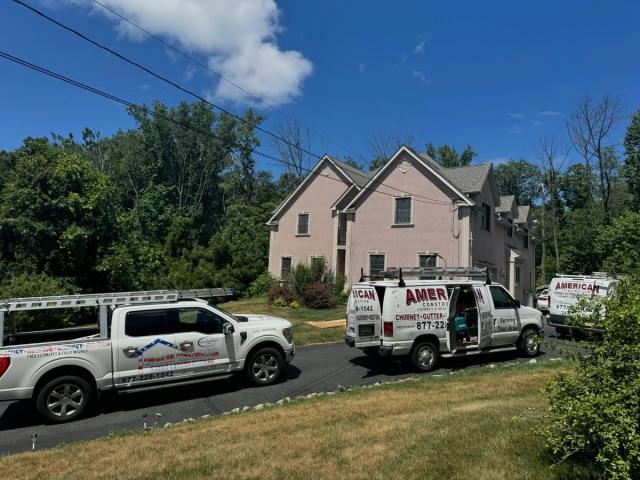
At American Roofing Pros, our free estimates include photos and a written, itemized price, with decking costs spelled out up front. As a GAF Master Elite® contractor, we inspect every sheet after tear-off and only replace what actually needs it.
Does Decking Work Slow Down the Job?
Not much. Swapping out a few sheets adds minutes, not days, and most of our roof replacements are still finished in a single day. A full redeck or plank overlay adds labor, but on an average home it usually stays within one to two days, weather permitting.
Fall is a smart time to find out where you stand. Replacing soft decking before winter means your new roof goes on a solid base before the first ice dams and nor'easters arrive.
Next Steps
If you have attic stains, a sagging roofline or an aging roof you plan to replace soon, have it looked at before winter sets in. We will check your decking from the attic and the roof, show you photos, and give you a clear, itemized price with no guesswork.
Call American Roofing Pros at (877) 228-1042 or request your free estimate today.