Water Leaking From a Ceiling Light? What NJ Homeowners Should Do
Water dripping from a ceiling light is a safety issue first. Learn what to do right away, the common causes in NJ homes, and when it points to a roof leak.
ARAmerican Roofing Pros··6 min read
If water is dripping from a ceiling light, treat it as an electrical hazard first and a roof problem second. Shut off power to that circuit at the breaker panel, stop using the fixture, and catch the water. Then find the source. On a top-floor ceiling it is most often a roof leak, a bathroom exhaust fan venting into the attic, or attic frost melting. On a lower floor it is usually plumbing.
Light fixtures are a common place for leaks to show up, even when the actual leak is several feet away. Water runs along rafters, sheathing and the top of drywall until it reaches an opening, and the hole cut for a light box is often the first one it finds. Here is how to stay safe, narrow down the cause and decide who to call.
What to Do in the First 15 Minutes
Water and electricity are a dangerous mix, so the order of these steps matters. Do not touch the fixture, the switch or any wet wiring while water is present.
- Turn off the breaker for that room at the main panel. A wall switch alone is not enough, because the fixture can still carry power. If you are unsure which breaker it is, or the panel area is wet, call an electrician or your utility.
- Catch the water with a bucket or bin, and lay towels or a tarp over flooring and furniture.
- Move valuables and electronics away from the drip area.
- Take photos and short videos of the fixture, the ceiling and any staining. Note the date, time and weather. This helps your roofer and any insurance claim.
- Check the attic if you can do so safely, with a flashlight and the power to that area off. Look for wet insulation, damp wood or frost directly above the fixture.
Leave the fixture off until it has dried completely and an electrician has checked it. Water inside a light box can corrode connections and create a fire risk later, even after the drip stops.
Common Causes of Water Coming Through a Light Fixture
In New Jersey homes, a leaking ceiling light almost always comes down to one of a handful of causes. Where the fixture is located and when the water appears are your best clues.
A roof leak
If the fixture is on the top floor and the water shows up during or right after rain, the roof is the most likely culprit. The most common entry points we find are:
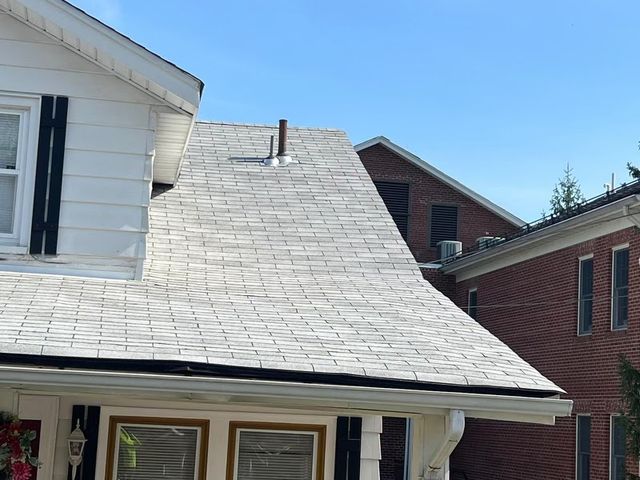
- Cracked or dried-out pipe boots around plumbing vents. The rubber collars on these boots often fail years before the shingles do. Our guide on roof leaks around vent pipes covers this in detail.
- Failed flashing at chimneys, skylights, dormers and sidewalls.
- Missing or lifted shingles after a windstorm, which are common after fall nor'easters.
- Ice dams in January and February, when meltwater backs up under the shingles at the eaves.
- Worn-out shingles on a roof that is 20 or more years old, where granule loss and cracking let water reach the deck.
Bathroom exhaust fan problems
This one surprises a lot of homeowners, and it peaks right about now as the weather turns cold. Many bathroom fans are ducted into the attic instead of outside, or the duct has slipped off its roof or wall vent. Warm, wet shower air hits cold attic wood, condenses, and drips back down through the fan housing or a nearby light. If the dripping happens after showers on cold days, start here.
Attic condensation and frost
On cold nights, moisture from the house can freeze on the underside of the roof deck and nails. When a sunny day or a mild spell arrives, that frost melts all at once and rains down onto the insulation and ceiling. Recessed lights in top-floor ceilings make this worse, because they leak warm, moist air straight into the attic above them. If you are not sure whether you are seeing a leak or moisture buildup, our post on attic condensation vs. a roof leak walks through the differences.
Plumbing or HVAC lines
If the fixture is on a first-floor ceiling under a bathroom or kitchen, plumbing is the prime suspect: a supply line, a drain, a toilet seal or failed tub caulk. In homes with an air handler in the attic, a clogged condensate line or a cracked drain pan can also overflow onto the ceiling, usually in summer when the AC is running.
How to Tell Which Problem You Have
Timing is the fastest way to narrow it down. Keep a simple log for a few days and match it to this list:
- Only during or after rain: almost certainly a roof leak or a flashing problem.
- Only during wind-driven rain from one direction: flashing, siding or vent issues on that side of the house.
- After showers, especially on cold days: bathroom fan ducting or poor attic ventilation.
- On a sunny or mild day after a cold snap, with no rain: attic frost melting.
- During winter thaws with snow on the roof: ice dams at the eaves.
- Constantly, rain or shine: a plumbing leak. Check your water meter with all fixtures off to confirm.
In the attic, a roof leak usually leaves a defined trail: dark streaks on the rafters or a stained spot on the decking that traces upslope toward a vent, chimney or valley. Condensation looks different. You will see widespread dampness, frost on nail tips or rusty nails across a large area, rather than one path.
What Repairs Typically Cost in New Jersey
Costs depend on the cause, how easy the area is to reach, your roof's pitch and the condition of the materials around the leak. These are general ranges, not quotes:
- Pipe boot replacement: often a few hundred dollars, depending on access and how many boots need work.
- Flashing repair at a chimney or wall: commonly a few hundred to around $1,500, more if masonry work or a cricket is needed.
- Replacing wind-damaged shingles: usually a few hundred dollars for a small area, provided matching shingles are available.
- Rerouting a bathroom fan duct to the outside: typically a modest job, though adding a new roof or wall vent adds cost.
- Ventilation upgrades to stop recurring attic frost: varies widely with the size and layout of the attic.
On top of the source repair, budget for an electrician to inspect the fixture and for drywall and paint if the ceiling is stained or sagging. Wet insulation directly above the fixture should be removed and replaced, because compressed, damp insulation loses most of its value and can hold moisture against the drywall.
Why You Shouldn't Wait
A drip through a light fixture means water has already soaked through insulation and reached the ceiling. Over a few weeks that can lead to mold on the drywall and framing, rot in the roof deck, and corroded wiring. In winter, the problem tends to get worse rather than better: rain, snow, ice dams and attic frost all keep feeding the same weak spot.
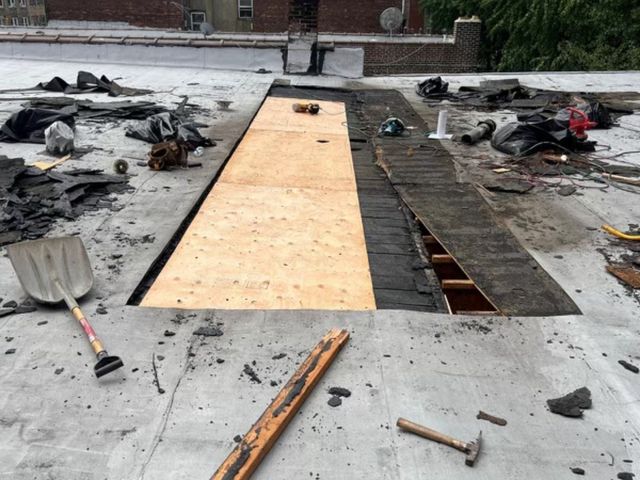
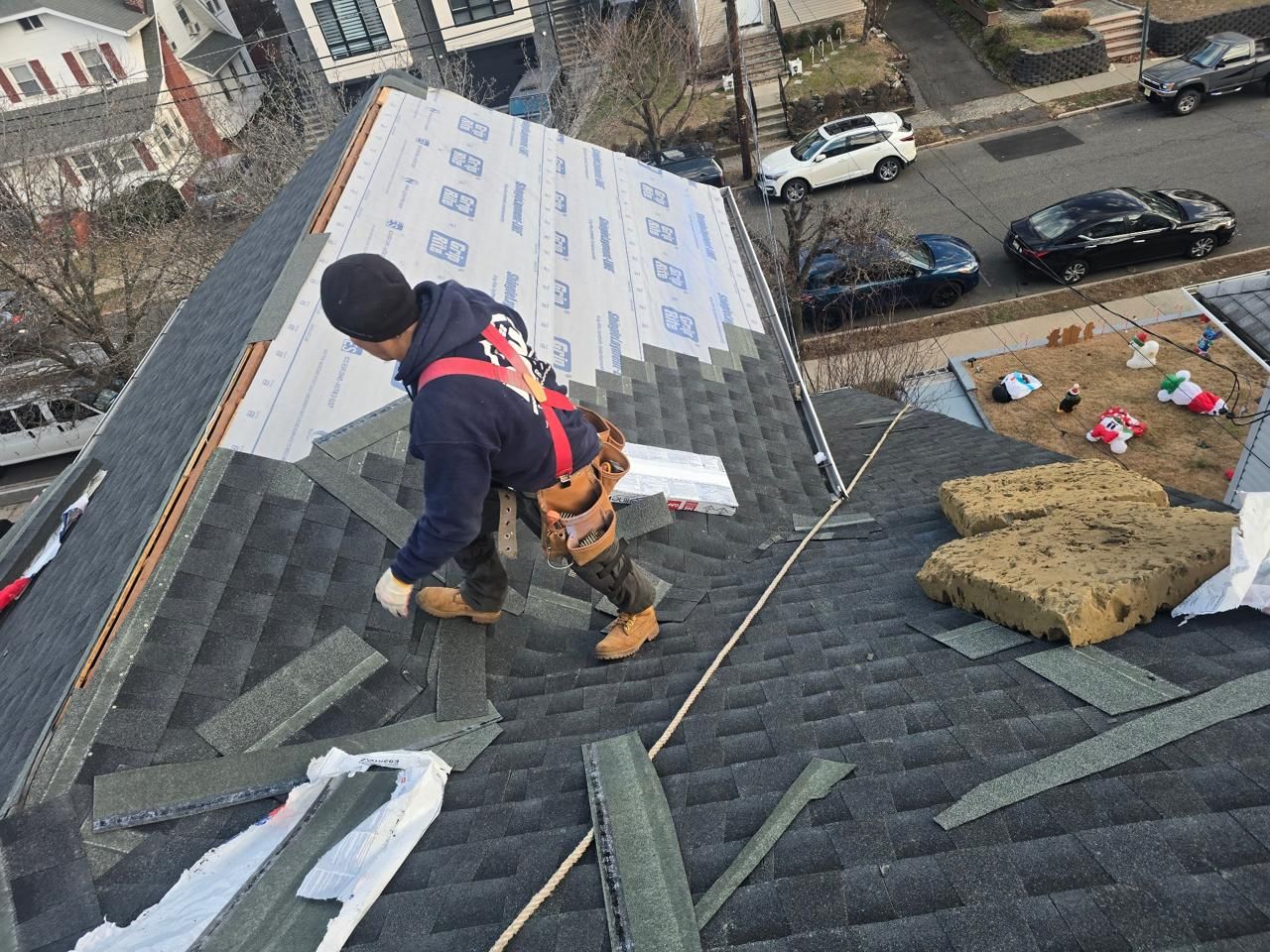
Many roof repairs can still be done safely in cold weather. Small fixes like pipe boots, flashing and shingle replacement are routine year-round, and a temporary tarp can protect the home until a full repair is possible. Our roof repair team handles these leaks across New Jersey, and our attic ventilation work addresses the condensation and frost problems that often show up at light fixtures.
When to Call a Roofer vs. Another Pro
- Call an electrician any time water has reached a fixture, switch or outlet, regardless of the cause.
- Call a roofer if the leak follows rain or snowmelt, if you see wet decking or stained rafters in the attic, or if the fixture is in a top-floor ceiling with no plumbing above it.
- Call a plumber if the water appears without rain, sits under a bathroom or kitchen, or your water meter moves when everything is off.
If you are not sure, start with a roof and attic inspection. As a GAF Master Elite® contractor, American Roofing Pros checks the roof surface, flashing, vents and attic together, so you get one clear answer about whether the roof is the source, with photos to back it up.
Next Steps
Kill the power to the fixture, catch the water and document what you see. Then get the source found before winter weather makes it worse. Call American Roofing Pros at (877) 228-1042 or request a free estimate. We will inspect the roof and attic, show you photos of what we find, and give you a written, itemized price for the repair.