Why Is My Chimney Leaking When It Rains? NJ Causes & Fixes
A chimney that leaks in the rain usually points to failed flashing, a cracked crown or a missing cap. Here's how NJ homeowners can find the cause and fix it.
ARAmerican Roofing Pros··6 min read
If your chimney leaks when it rains, the cause is almost always one of four things: worn or poorly installed flashing where the chimney meets the roof, a cracked chimney crown, a missing or damaged chimney cap, or porous brick and mortar that soaks up water. Flashing is the most common culprit on New Jersey homes, and the good news is that most chimney leaks can be repaired without rebuilding the chimney or replacing the roof.
November is when many NJ homeowners first notice the problem. Cold, wind-driven fall rain finds weak spots that summer storms didn't, and once freeze-thaw cycles start, small gaps get bigger fast. Here's how to figure out where the water is coming from, what the fix usually costs and what you can do in the meantime.
The Most Common Causes of a Leaking Chimney
1. Failed or improperly installed flashing
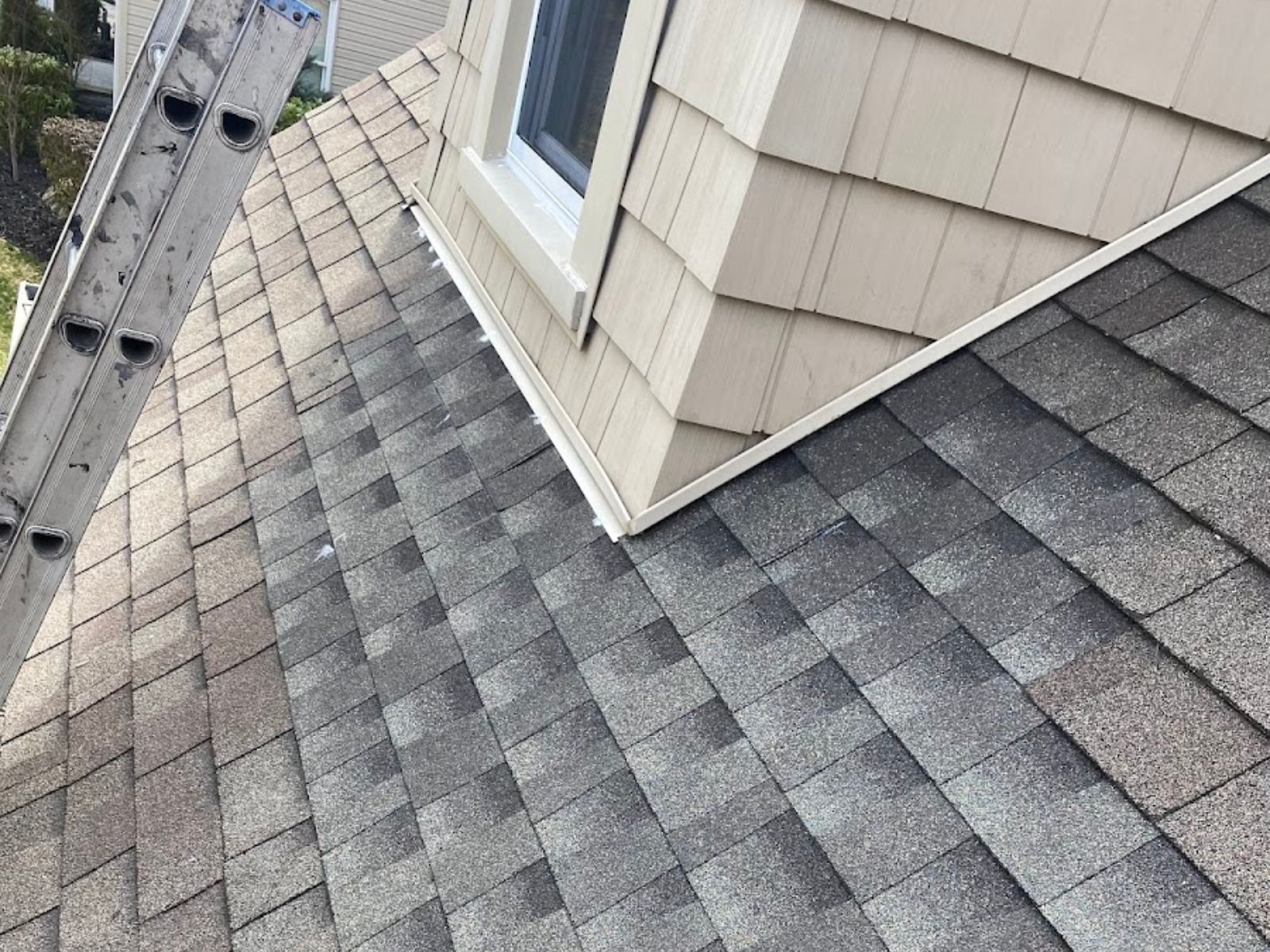
A chimney punches a large hole through your roof, and metal flashing is what seals that joint. A proper installation uses two layers: step flashing woven under each course of shingles along the sides, and counter flashing cut into the mortar joints and folded down over the step flashing. When either piece corrodes, pulls loose or was never installed correctly, water runs straight down the outside of the chimney into your attic or ceiling.
A frequent shortcut we see is flashing that was simply face-nailed to the brick and smeared with roofing cement. That can hold for a year or two, but sealant dries out, cracks and lets water in. You can read more about why this detail matters in our post on roof flashing repair.
2. A cracked chimney crown
The crown is the concrete or mortar slab on top of the chimney that sheds water away from the flue. Many crowns are built with plain mortar that's too thin, and New Jersey's winters crack them. Water then soaks into the brick below and can show up as a leak far from the top of the chimney.
3. Missing or damaged chimney cap
Without a cap, rain falls straight down the flue. You'll often see water or rust inside the fireplace or around the damper rather than on a ceiling. Caps also keep out birds, squirrels and leaves, which matter just as much this time of year.
4. Porous brick and deteriorating mortar
Brick and mortar absorb water like a sponge. On older chimneys, especially ones with crumbling joints or spalling (flaking) brick faces, enough water can pass through the masonry itself to cause staining or dampness inside the house.
5. No cricket behind a wide chimney
A cricket (or saddle) is a small peaked structure built on the uphill side of the chimney to split water and debris around it. Building codes generally call for one on chimneys wider than 30 inches. Without it, water, leaves and snow pile up behind the chimney, and that spot becomes a leak waiting to happen.
How to Tell Where Your Chimney Leak Is Coming From
You don't need to get on the roof to gather useful clues. In fact, please don't, especially on wet or frosty fall mornings. Instead, pay attention to when and where the water shows up:
- Leaks only during wind-driven or heavy rain: usually flashing or a gap on one side of the chimney.
- Leaks during almost every rain: often a missing cap, a cracked crown or a large flashing failure.
- Water inside the fireplace or on the damper: typically the cap or crown, not the roof.
- Stains on the ceiling or wall next to the chimney: most often flashing at the roof line.
- Damp spots that appear without rain, especially in cold weather: could be condensation inside the flue, which is a venting or liner issue rather than a roof leak.
- White, chalky deposits (efflorescence) on brick: a sign water is moving through the masonry.
If you have attic access, take a flashlight up after a rain and look at the framing and sheathing around the chimney. Dark stains, wet wood or rusty nails on one side help pinpoint the problem. Take photos; they're very helpful to whoever comes out to inspect it.
What Chimney Leak Repairs Typically Cost in NJ
Costs vary with the size and height of the chimney, the roof pitch, the material and how much damage the water has already done. As a general guide for New Jersey homes:
- Resealing or resetting counter flashing: roughly $300 to $700.
- Replacing step and counter flashing: roughly $800 to $2,000, more for large chimneys or copper flashing.
- New chimney cap, installed: roughly $150 to $500 depending on size and material.
- Crown repair or sealing: roughly $300 to $1,000; a full crown rebuild can run $1,000 to $3,000.
- Masonry water repellent: roughly $300 to $800 for a typical chimney.
- Adding a cricket: roughly $500 to $1,500 as a stand-alone job, usually less when done during a roof replacement.
If water has been getting in for a while, there may also be rotted roof decking, wet insulation or drywall to repair. That's why it pays to fix chimney leaks early rather than waiting until spring.
Repair the Chimney Flashing or Replace the Roof?
If your shingles are in decent shape, a chimney leak is usually a targeted repair. A good roofer will remove the shingles around the chimney, install new step flashing, cut counter flashing properly into the mortar joints and add ice and water membrane underneath. We explain why that membrane matters in Ice and Water Shield: Where Your NJ Roof Really Needs It.
If your roof is 20 or more years old, curling or losing granules, it often makes sense to address the chimney as part of a full replacement. In that case, insist that all chimney flashing be replaced, not reused, and ask whether a cricket should be added. As a GAF Master Elite® contractor, American Roofing Pros replaces chimney flashing as a standard part of every replacement, because reusing tired metal is one of the most common reasons new roofs leak.
What to Do Right Now While You Wait for a Repair
A few simple steps can limit damage until a professional gets there:
- Put a bucket or towels under any active drip and move valuables, rugs and furniture away from the wall.
- If a ceiling is bulging with water, poke a small hole in the center over a bucket to release it in a controlled way.
- Close the fireplace damper and avoid using the fireplace until the chimney has been checked.
- Photograph the stains and any water, with dates, in case you need them for insurance.
- Skip the DIY tar job. Smearing roofing cement over flashing often traps water and makes a proper repair harder later.
If the leak started right after a storm, such as high winds tearing flashing loose, your homeowners policy may cover part of the repair. Gradual wear and old sealant usually aren't covered, so a professional assessment of the cause matters.
Why November Is the Time to Fix It
In New Jersey, water that gets into brick, mortar and crowns in the fall freezes and expands once overnight temperatures drop below freezing. Each cycle widens cracks and loosens flashing a little more, and winter snow piling up behind a chimney can turn a minor drip into a serious leak. Flashing and cap repairs are also much easier to do well before the ground and roof are covered in ice.
A professional roof inspection before winter is a smart move if you've noticed any staining near the chimney, even if it seems dry right now.
Next Steps
If your chimney is leaking, or you see stains on the ceiling or in the attic around it, have it looked at before winter sets in. Our team handles chimney flashing, caps and crickets as part of our roof repair service, and we'll show you photos of exactly what we find along with a written, itemized price.
Call American Roofing Pros at (877) 228-1042 or request a free estimate. We serve homeowners across New Jersey from our Bergen County offices in Elmwood Park, Cliffside Park and Bergenfield.