What Is a Drip Edge and Does Your NJ Roof Need One?
A drip edge keeps water off your fascia and out of your roof deck. Here's what it does, what NJ code requires, and when it's worth adding to your home.
ARAmerican Roofing Pros··6 min read
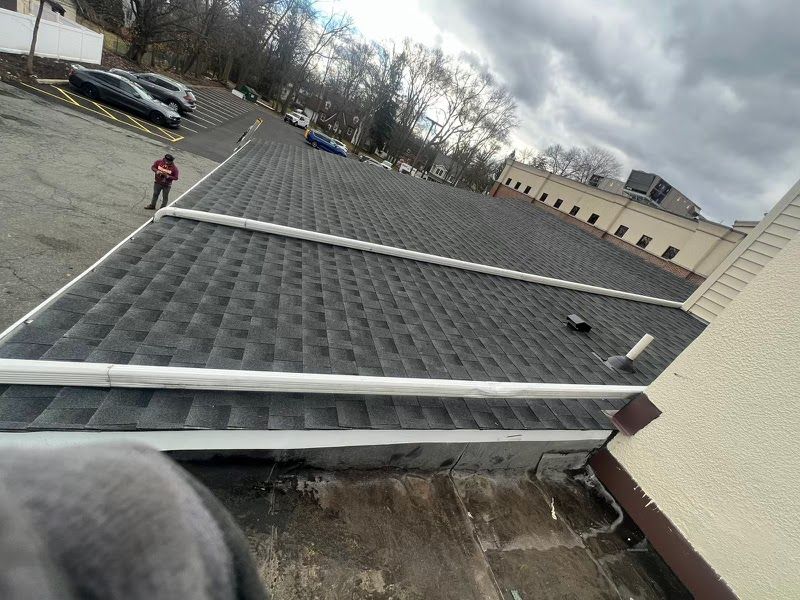
Yes, almost every shingle roof in New Jersey needs a drip edge. It is a thin strip of metal flashing along the eaves and rake edges that directs water into the gutters and away from the wood behind them. Under the residential code New Jersey follows, it is required on asphalt shingle roofs. Many older homes were roofed without one, and the damage usually shows up years later as rotted fascia boards and stained siding.
November is a good time to think about it. Fall rain, leaf-clogged gutters and the first freeze-thaw cycles all put the edges of your roof under stress. This guide covers what a drip edge does, what the code requires, how to tell if you are missing one, and what it costs to fix.
What a Drip Edge Actually Does
Water does not always fall cleanly off a roof. Surface tension lets it cling to the bottom of the shingles and curl back underneath, where it soaks into the edge of the plywood deck and the fascia board. A drip edge breaks that path. Its angled lip pushes water out and down, into the gutter instead of behind it.
A properly installed drip edge also:
- Protects the roof deck edge. The outer few inches of plywood or OSB are the most exposed part of the deck and the first to swell and delaminate.
- Keeps fascia and soffits dry. That means less paint peeling, less rot and fewer carpentry repairs.
- Supports the shingle edge. It gives the first course of shingles a straight, rigid edge, which helps resist wind uplift along the eaves and rakes.
- Closes the gap at the roof edge. Without it, small gaps between the deck and fascia can let in insects, wasps and even squirrels.
What New Jersey Code Requires
New Jersey builds its residential code on the International Residential Code (IRC). Since the 2012 edition, the IRC has required a drip edge at both the eaves and the rake edges of asphalt shingle roofs. The basic rules are straightforward:
- Adjacent pieces must overlap at least 2 inches.
- The drip edge must extend at least 1/4 inch below the roof sheathing and at least 2 inches back onto the deck.
- It must be fastened to the deck no more than 12 inches apart.
- Underlayment goes over the drip edge along the eaves and under it along the rakes, so water always flows over each layer rather than behind it.
If you are replacing your roof, a drip edge is part of a code-compliant job, and your township's building inspector may look for it. GAF also lists it among recommended components for its shingle systems. If a roof replacement estimate does not mention drip edge, ask about it. Our guide on how to compare roof replacement estimates in NJ covers other line items worth checking.
Types and Materials
Drip edge comes in a few common profiles. The right one depends on your roof edge, gutter setup and fascia depth.
Common profiles
- Type C (L-style): A simple 90-degree bend. It is common on rakes and on older or budget installs.
- Type D (T-style or "gutter apron" style): It has an extended lip that kicks water farther out. This is the most common choice for eaves on NJ homes because it sends water cleanly into the gutter.
- Gutter apron: It has a longer lower leg that tucks into or behind the gutter. It is useful where a gap exists between the roof edge and the gutter.
Materials
- Aluminum: Lightweight, won't rust, and available in many colors to match trim. It is the most popular choice for residential roofs here.
- Galvanized steel: Stiffer and slightly more dent-resistant. It holds up well but can eventually rust at cut edges.
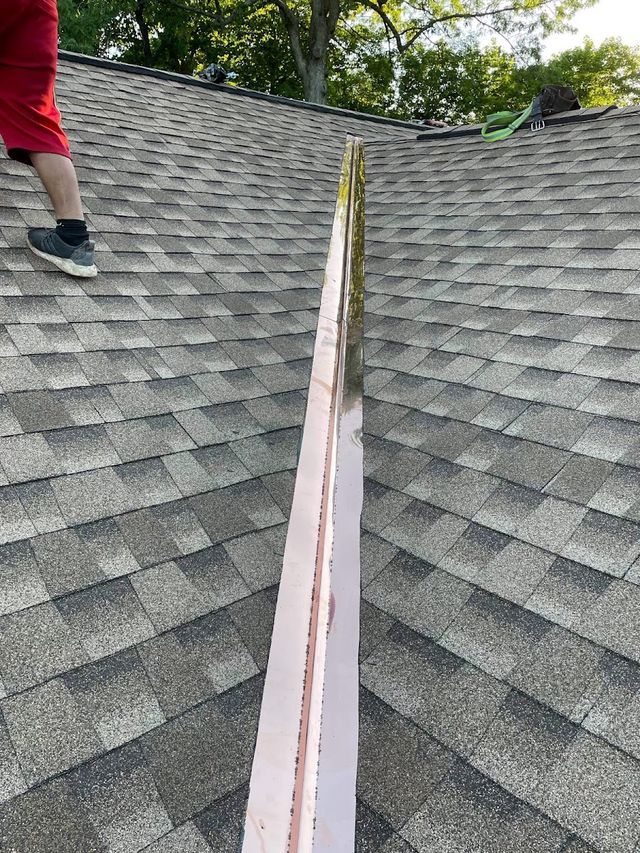
- Copper: Premium and long-lasting. It is usually chosen for high-end homes or to match copper valleys and gutters.
Signs Your Roof Is Missing a Drip Edge
You can often spot a missing or failed drip edge from the ground or a ladder at the gutter line. Look for:
- Shingles that end flush with the deck, with no metal visible beneath them along the eaves or gable ends
- Soft, rotted or crumbling fascia boards, especially at corners
- Peeling paint or dark water streaks on the fascia and siding below the roof edge
- Water running behind the gutter instead of into it during heavy rain
- Sagging or drooping shingle edges along the rakes
- Wasp nests or animal activity right at the roof edge
Some of these symptoms overlap with gutter problems. Clogged or poorly pitched gutters can push water behind the fascia even when a drip edge is present. If your gutters are overflowing this fall, our post on whether clogged gutters can damage your roof explains how to tell the two apart.
Drip Edge and Winter: Why It Matters Now
Winter is hard on roof edges in New Jersey. Snow melts during the day, runs to the cold eaves and refreezes overnight. Without a drip edge, that meltwater has an easy path into the deck edge and fascia. Repeated freeze-thaw cycles then widen small gaps and split wood.
A drip edge works together with ice and water shield along the eaves. The membrane protects against water backing up under the shingles from ice dams, and the drip edge handles water at the very edge. To learn more about that layer, read Ice and Water Shield: Where Your NJ Roof Really Needs It.
Can You Add a Drip Edge to an Existing Roof?
Yes, but it takes care. The roofer has to break the seal on the first course of shingles, slide the drip edge underneath, fasten it and reseal the shingles. On a roof that is fairly young and in good shape, this can be a smart fix that protects new or repaired fascia.
There are limits, though:
- Cold weather makes shingles brittle. Lifting edges on a 30-degree day risks cracking them, so retrofits are best scheduled on milder days, which still come along in November.
- Older roofs may not be worth it. If your shingles are 18 to 20+ years old, the money is often better put toward a full replacement that includes drip edge, new underlayment and ice and water shield.
- Rotted wood has to be fixed first. A new drip edge over a soft fascia or deck edge won't hold fasteners properly.
What It Costs in New Jersey
On a full roof replacement, drip edge is normally included in the price and adds only a small share of the total. Material costs are modest. A typical single-family home has roughly 150 to 300 linear feet of eaves and rakes.
Retrofitting drip edge onto an existing roof costs more per foot because of the extra labor and care involved. Many NJ homeowners pay somewhere in the range of several hundred dollars for a section to around $1,500 to $2,500 for a whole house. Price depends on roof size, pitch, number of stories, access, material and whether fascia or deck repairs are needed. Replacing rotted fascia boards can add a few hundred dollars or more depending on how much wood is damaged.
As a GAF Master Elite® contractor, American Roofing Pros installs drip edge on every shingle roof replacement as part of a complete system, and we list it clearly on our written, itemized estimates.
Next Steps
If you see stained fascia, water running behind your gutters, or shingle edges with no metal beneath them, have the roof edge checked before winter weather arrives. We can tell you whether a drip edge retrofit and a roof repair make sense, or whether your roof is close enough to the end of its life that replacement is the better value.
Call American Roofing Pros at (877) 228-1042 or request a free estimate. You will get photos of what we find and a written, itemized price, with no pressure and no guesswork.