A quality roofing project is defined by more than the materials used. Roof shingles must be installed with precision, proper alignment, careful attention to transitions, and detailed workmanship around every part of the roof.
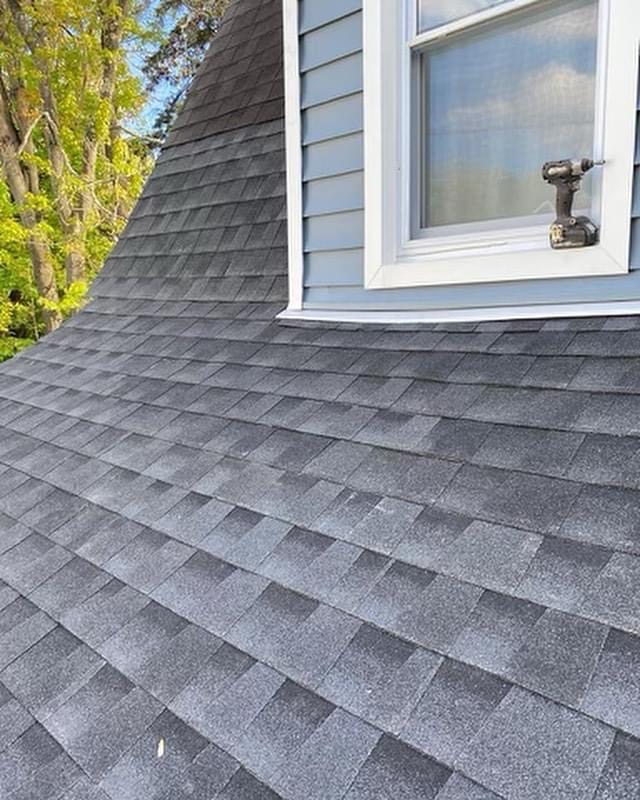
The project shown in this photo is a clear example of a professionally finished shingle roof. The gray shingles create a consistent pattern across the roof surface, while the transition around the raised window area is carefully finished to create a clean connection between the roofing and the exterior wall.
From the overall appearance to the smaller installation details, the finished roof demonstrates why professional workmanship matters when protecting and improving a home.
At AMERICAN ROOFING PROS, roofing projects are approached with attention to the condition of the existing roof, the installation process, the roofing materials, and the details that help create a finished and reliable system.
Why Roof Shingles Matter
Roof shingles are one of the most visible components of a residential roofing system.
They provide a protective surface over the roof while also contributing significantly to the appearance of the home.
In the project shown in the photo, the gray shingle pattern gives the roof a clean and uniform appearance. The individual rows are aligned across the roof surface, creating a consistent visual pattern.
However, good roofing is not only about how the shingles look.
Proper installation is equally important.
Shingles need to be installed according to the requirements of the selected roofing system. Their positioning, fastening, overlaps, and relationship with other roof components all contribute to the finished result.
A professional installation also pays close attention to areas where different surfaces meet.
That is particularly important in the section shown in the photo, where the roofing surface meets the vertical exterior wall and the window structure.
Preparing the Roof for Installation
Before new roof shingles are installed, the roof surface needs to be properly prepared.
A professional roofing inspection can help identify visible damage, worn materials, flashing problems, drainage concerns, and other conditions that may affect the installation.
AMERICAN ROOFING PROS has published guidance explaining that a professional roof inspection can evaluate shingles, flashing, roof valleys, roof edges, ventilation, and other components of a roofing system.
Proper preparation can include evaluating:
- Existing roofing materials
- Roof decking
- Flashing
- Valleys
- Roof penetrations
- Edges and eaves
- Ventilation components
- Areas around windows and dormers
The objective is to make sure the surface is ready for the new roofing materials.
Installing new shingles over an improperly prepared area can compromise the finished result. Professional preparation therefore plays an important role in the overall quality of a roofing project.
Creating Consistent Shingle Alignment
One of the first things people notice about the roof in this photo is the consistency of the roof shingles.
The rows follow the shape of the roof, creating a clean and organized appearance.
This type of finish requires careful installation.
Shingles must be positioned correctly so that the courses remain aligned across the roof surface. Installers also need to maintain appropriate spacing and fastening patterns throughout the project.
Even relatively small inconsistencies can become noticeable when repeated across a large roof.
Professional installation helps create a uniform appearance while also following the requirements of the roofing system being installed.
A Clean Pattern Improves the Finished Appearance
The gray shingles in this project create a subtle variation in tone that gives the roof visual depth without making the surface appear irregular.
The result is a finished roof that looks clean from both close range and from a distance.
That combination of appearance and installation precision is an important part of quality roofing workmanship.
Detailing Around Windows and Roof Transitions
The most interesting part of this photo is the transition between the roof shingles and the raised window structure.
This area requires careful attention because several different surfaces meet in a relatively small space.
The roof slopes upward toward the vertical wall surrounding the window. The roofing material must transition neatly into this structure while maintaining appropriate protection against water intrusion.
Professional roof installation pays particular attention to areas such as:
- Dormers
- Windows
- Chimneys
- Skylights
- Wall intersections
- Roof-to-wall transitions
- Vents and other penetrations
These areas can be more complicated than a large, open section of roof.
The quality of the installation around these details can have a significant effect on both the appearance and performance of the roofing system.
Protecting Vulnerable Roof Areas
A roofing system has several areas where water needs to be carefully directed away from the structure.
Roof valleys, penetrations, edges, and transitions require appropriate detailing.
The same principle applies around the window area shown in the photo.
The roof shingles create the primary visible surface, but other components work together with the shingles to help manage moisture.
Flashing is especially important around areas where the roof intersects with walls and other structures.
According to AMERICAN ROOFING PROS’ published roof inspection guidance, flashing around chimneys, vents, and skylights is one of the areas that should be evaluated during a professional roof inspection.
This illustrates why a roofing project should always be viewed as a complete system rather than simply a layer of shingles.
The Importance of Professional Workmanship
Quality roof shingles can only perform as intended when they are installed correctly.
Professional workmanship involves more than placing one shingle after another.
It requires understanding how the roof is designed, how water moves across the surface, where different roof planes meet, and how roofing materials interact with flashing and other components.
The finished photo shows several characteristics associated with careful workmanship:
- Consistent shingle courses
- Clean roof lines
- Proper transitions
- Neat edges
- Carefully finished areas around the window
- Uniform overall appearance
These details can make a significant difference in the final result.
AMERICAN ROOFING PROS’ published materials emphasize professional inspection, quality installation, and attention to roofing conditions when evaluating residential roofing projects.
Maintaining Roof Shingles After Installation
Even a professionally installed roof benefits from regular inspection and maintenance.
Over time, exposure to rain, wind, sunlight, snow, ice, and changing temperatures can affect roofing materials.
Homeowners should periodically look for visible signs of deterioration, including:
- Cracked shingles
- Missing shingles
- Curling or lifted shingles
- Excessive granule loss
- Damaged flashing
- Moss or debris accumulation
- Signs of water intrusion
Regular inspections can help identify smaller problems before they become more extensive.
AMERICAN ROOFING PROS recommends routine roof inspections and maintenance as part of protecting the roofing system and extending its useful service life.
For homeowners who want a more detailed checklist, the company’s Roof Inspection Checklist for New Jersey Homeowners provides additional information about the areas that should be evaluated.
When Roof Shingles May Need Repair or Replacement
Not every roofing problem requires a complete replacement.
Sometimes a localized repair can address the issue.
However, widespread deterioration, repeated leaks, extensive shingle damage, or an aging roofing system may indicate that a larger project should be considered.
AMERICAN ROOFING PROS’ guide on Signs Your Roof Needs Immediate Repair discusses common warning signs such as missing or damaged shingles, leaks, damaged flashing, and storm-related problems.
A professional inspection can help determine whether repair or replacement is appropriate for a specific roof.
This is particularly important because problems that appear minor from the ground may be more significant when the roof surface and underlying components are inspected closely.
Choosing the Right Roofing Approach
When a homeowner is considering new roof shingles, several factors should be evaluated before installation begins.
These can include:
Roof Condition
The condition of the existing roofing system should be evaluated before deciding whether repair or replacement is appropriate.
Roof Design
Complex roofs with dormers, valleys, multiple slopes, and penetrations require careful planning.
The roof shown in this photo includes a raised window/dormer area that creates an important transition between the sloped roofing surface and the exterior wall.
Material Selection
Different roofing materials and shingle products have different installation requirements, appearances, and performance characteristics.
Installation Quality
Even high-quality roofing products require proper installation.
Long-Term Maintenance
A roofing project should also be considered in terms of future inspections and maintenance.
Taking these factors into account can help homeowners make informed decisions about their roofing system.
Final Inspection and Quality Control
After the roof shingles have been installed, a professional project should receive a final inspection.
The finished roof should be checked for visible installation issues, incomplete areas, damaged materials, and details around roof penetrations and transitions.
The final inspection is an opportunity to confirm that the roofing work has been completed properly and that the finished appearance meets the expected standard.
The image provided for this project shows a clean finished surface with consistent gray shingles and carefully defined transitions around the raised window structure.
That final appearance is the result homeowners expect when investing in professional roofing work.
Roofing Safety Is Also Part of Professional Work
Roofing work takes place at elevated heights and requires appropriate safety procedures.
OSHA provides guidance for fall protection during residential construction, including roofing activities. Its guidance explains that fall protection is an important consideration for workers performing residential roofing work.
Professional roofing contractors should follow applicable safety requirements and use appropriate protection for workers and the job site.
Homeowners should also avoid attempting dangerous roof work themselves, particularly on steep or elevated surfaces.
For additional information, see the official OSHA Fall Protection in Residential Construction guidance.
Note: The OSHA link should remain a normal external link in WordPress if you want it treated as a DoFollow link. Do not add nofollow, sponsored, or ugc attributes unless there is a specific reason to do so.
Professional Roofing Work with Attention to Detail
The completed roof shown in this project demonstrates how much attention can go into what may initially appear to be a simple shingle installation.
The consistent gray roof shingles, clean courses, carefully finished window transition, and overall uniform appearance all contribute to the quality of the finished roof.
A professional roofing project should consider the entire system, including preparation, materials, installation, flashing, transitions, ventilation, and final inspection.
That approach helps create a roof that is not only visually appealing but also properly detailed for its intended purpose.
AMERICAN ROOFING PROS provides roofing inspection, repair, maintenance, replacement, and installation services for homeowners. The company’s published materials also provide information about roof replacement, inspections, maintenance, and storm-related roofing concerns.
For homeowners researching a replacement project, the company’s guide How Long Does a Roof Replacement Take in New Jersey? explains some of the factors that can affect a roofing project’s timeline.
You can also visit the Free Estimate page to request information about a roofing project.
Final Thoughts
This roofing project is a strong example of how professional installation can transform the appearance and finish of a residential roof.
The gray roof shingles create a clean and consistent surface, while the carefully completed transition around the window demonstrates the importance of attention to detail in more complex areas of the roof.
For homeowners considering new shingles, repairs, or a complete roofing project, professional evaluation and proper installation are important steps toward achieving a finished system that looks clean and performs as intended.
AMERICAN ROOFING PROS provides professional roofing services and inspections for homeowners looking to maintain, repair, or improve their roofing systems.
Phone: (877) 228-1042