Chimney repair is an important part of maintaining the exterior condition and protection of a home. Because a chimney extends above the roofline, it is continuously exposed to rain, snow, wind, freezing temperatures, moisture, and seasonal weather changes.
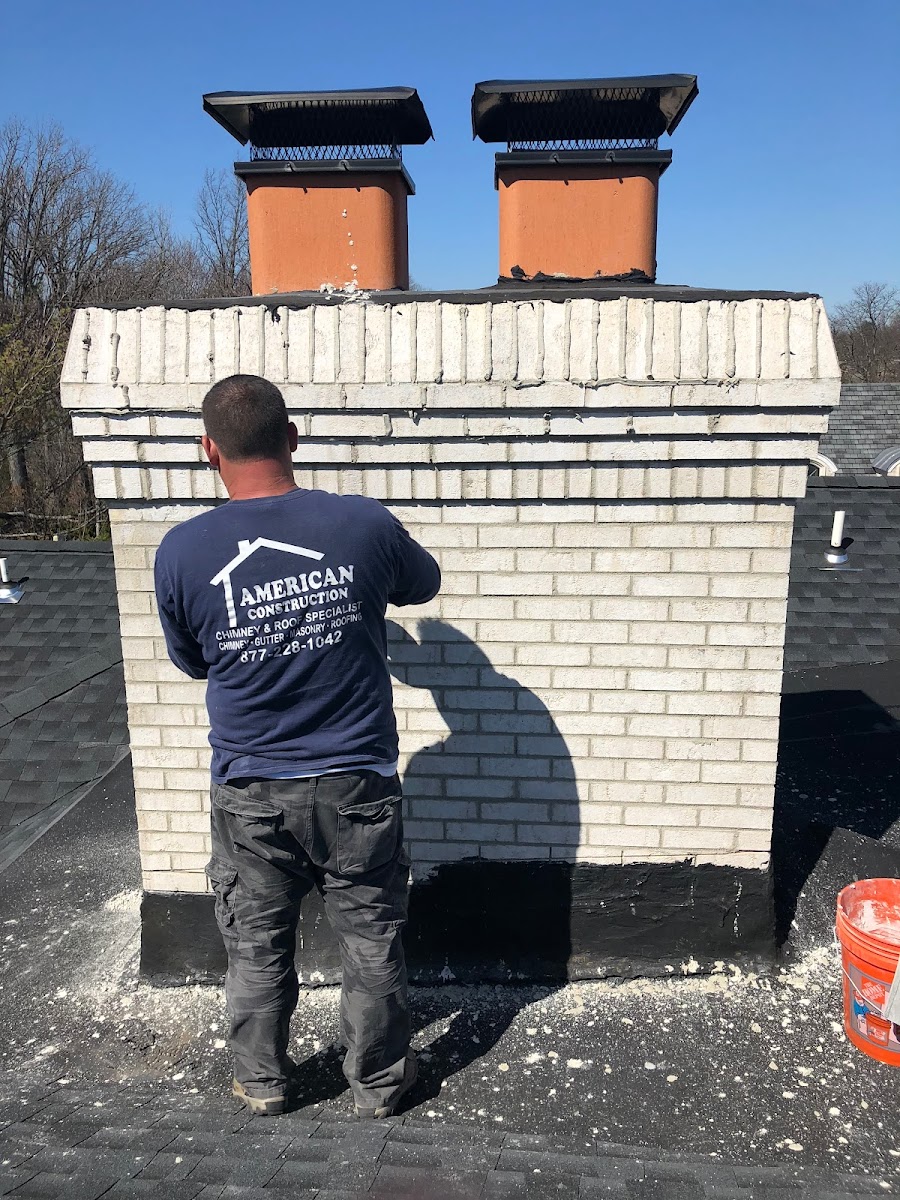
The photograph featured in this project shows a professional technician working directly on a large masonry chimney. The structure includes detailed brickwork, two chimney flues, protective chimney caps, and the roof-to-chimney transition. The image provides a close look at the hands-on workmanship involved in maintaining and repairing an exterior masonry structure.
At American Roofing Pros NJ, roofing and chimney services are approached as connected parts of a home’s exterior protection. The company’s published chimney services include chimney repair and restoration, inspections, cleaning and maintenance, rebuilding, liner replacement, leak repair, and waterproofing.
Professional masonry work requires more than simply covering visible damage. The condition of the masonry, mortar joints, chimney caps, flashing, and areas exposed to moisture should be evaluated before determining the appropriate repair.
1. Why Professional Chimney Repair Matters
A chimney is more than a decorative feature on a roof.
It is a masonry structure that must withstand continuous exposure to outdoor conditions. Over time, water penetration, temperature changes, freeze-thaw cycles, and general weather exposure can affect bricks, mortar joints, chimney caps, flashing, and other components.
Professional chimney repair helps address visible and underlying conditions before they potentially develop into more extensive problems.
The photograph demonstrates the scale and detail of this type of work. The technician is positioned directly in front of a large masonry chimney and is working at roof level, where precision and attention to detail are essential.
The National Park Service identifies deteriorated mortar joints and masonry as conditions that require appropriate repair techniques. Its preservation guidance specifically discusses professional repointing and the importance of selecting mortar that is compatible with the existing masonry.
For a homeowner, this means chimney maintenance should not be limited to appearance.
The objective is to properly evaluate the masonry and determine what type of work is appropriate for the actual condition of the chimney.
2. Inspecting the Masonry Before Repair
A professional chimney repair project should begin with an inspection.
Before materials are applied or masonry is replaced, the condition of the chimney should be evaluated.
A professional inspection may examine:
- Brick condition
- Mortar joints
- Cracks
- Chimney crown or cap
- Flue structures
- Flashing
- Signs of water intrusion
- Deteriorated masonry
- Roof-to-chimney transitions
- Areas of previous repair
The purpose of an inspection is to determine what is actually causing the problem.
For example, visible deterioration may be related to moisture entering through damaged masonry, a deteriorated cap, defective flashing, or another component.
American Roofing Pros NJ lists chimney inspections as one of its chimney services and states that its chimney service process is designed to evaluate the condition of the structure before recommending appropriate work.
This inspection-based approach helps ensure that the repair is matched to the condition of the chimney.
3. Repairing Mortar Joints and Masonry
One of the most important parts of chimney repair can involve the masonry joints.
Mortar connects individual bricks and helps form a stable masonry structure. When mortar deteriorates, cracks, or becomes loose, moisture can find pathways into the masonry.
Repointing is the process of removing deteriorated mortar from joints and replacing it with new mortar.
The National Park Service explains that repointing requires careful attention to the properties of the existing masonry, including mortar strength, permeability, color, and texture. It also warns that inappropriate mortar or poor pointing techniques can contribute to additional masonry deterioration.
This is why professional experience matters.
A repair should not simply fill every visible gap with any available material.
The appropriate repair method depends on the condition and characteristics of the existing masonry.
In the photograph, the chimney has a substantial brick structure with numerous horizontal and vertical joints. Working on a chimney of this size requires careful control of the repair area and attention to the existing masonry pattern.
The goal is a repair that integrates properly with the existing structure while addressing the areas that require attention.
4. Chimney Caps and Moisture Protection
The upper portion of the chimney is particularly exposed to weather.
The photograph clearly shows two flue structures with protective metal caps. These components help protect the openings from direct exposure to precipitation and other outdoor conditions.
A properly maintained chimney cap can be an important part of the overall moisture-management strategy.
Water that repeatedly enters or remains around masonry can contribute to deterioration over time.
The National Park Service’s masonry preservation guidance emphasizes the importance of controlling unwanted moisture and using appropriate repair methods when masonry is exposed to weather.
During a professional inspection, the chimney cap or crown should therefore be considered together with the masonry beneath it.
A chimney is a complete system.
The cap, masonry, mortar, flue components, flashing, and surrounding roof all have roles in protecting the structure.
5. The Roof-to-Chimney Connection
One of the most important areas during chimney repair is the point where the chimney meets the roof.
The chimney creates a penetration through the roofing system.
Because water naturally travels across the roof surface, the transition around the chimney needs to be properly detailed so water is directed away from the structure.
This is where flashing becomes particularly important.
Damaged, deteriorated, or improperly installed flashing can contribute to water intrusion around the chimney.
A homeowner may therefore notice what appears to be a chimney problem when the actual source of moisture is at the roof-to-chimney transition.
American Roofing Pros NJ provides both roofing and chimney services and specifically lists chimney leak repair and waterproofing among its chimney services. Its roofing information also addresses flashing around roof penetrations such as chimneys.
This is an important reason to evaluate the roof and chimney together.
A professional inspection can help determine whether the issue is related primarily to masonry, flashing, roofing materials, or a combination of components.
6. Professional Workmanship and Safety
The photograph also highlights the importance of professional workmanship and job-site safety.
The technician is working directly at roof level, immediately in front of a large chimney structure. Roofing and chimney work requires appropriate access, equipment, protective measures, and careful movement around the roof surface.
Masonry work also requires attention to the existing structure.
A professional must work carefully around bricks, mortar joints, caps, flashing, and other components without unnecessarily damaging surrounding materials.
The finished result should not only address the identified problem but should also integrate appropriately with the existing chimney.
This is especially important when the chimney is a prominent architectural feature of the home.
The National Park Service’s technical guidance emphasizes that masonry repairs require appropriate materials and techniques, particularly where existing masonry is being preserved or repaired.
7. When a Chimney Should Be Inspected
Homeowners should consider professional evaluation when they notice visible signs of deterioration.
Some conditions that may justify an inspection include:
Cracked Masonry
Visible cracks in bricks, mortar joints, or other masonry components should be evaluated to determine their cause and extent.
Deteriorated Mortar
Loose, missing, or significantly deteriorated mortar joints can allow moisture to enter the masonry.
Water Leaks
Water stains near a chimney or evidence of moisture inside the home can indicate problems involving flashing, masonry, caps, or other components.
Damaged Chimney Caps
A damaged or deteriorated cap can leave portions of the chimney exposed to weather.
Visible Flashing Problems
Flashing around the chimney should be evaluated when there are signs of water intrusion or deterioration.
After Severe Weather
Strong storms, heavy wind, freezing conditions, and other weather events can expose weaknesses or cause damage that was not previously visible.
American Roofing Pros NJ offers chimney inspections and related chimney services as part of its professional exterior services.
8. Chimney Repair and Long-Term Maintenance
Completing chimney repair is only one part of maintaining a masonry chimney.
Regular observation and professional inspections can help identify developing problems.
Homeowners can periodically look for:
- New cracks
- Loose bricks
- Deteriorating mortar
- Staining
- Damaged caps
- Signs of water entry
- Deterioration around flashing
- Changes in the condition of the roof surrounding the chimney
The National Park Service maintains extensive technical resources covering masonry maintenance, mortar repair, moisture management, and appropriate preservation techniques.
For older or historically significant masonry, material compatibility becomes particularly important. The NPS notes that repointing materials should be selected with consideration for the existing masonry’s physical characteristics.
For homeowners, the practical lesson is simple: visible chimney deterioration should be evaluated rather than ignored.
Early professional assessment can help determine whether the appropriate solution is localized repair, repointing, waterproofing, rebuilding, or another service.
9. American Roofing Pros NJ Chimney Services
American Roofing Pros NJ provides roofing and chimney services throughout New Jersey.
According to the company’s current website, its chimney services include:
- Chimney Repair & Restoration
- Chimney Inspections
- Chimney Cleaning & Maintenance
- Chimney Rebuilding
- Liner Replacement
- Chimney Leak Repair
- Chimney Waterproofing
The company also provides roof repair and replacement services, allowing roofing and chimney-related conditions to be evaluated together when necessary.
The company’s website currently states that it is licensed and insured in New Jersey under License #13VH07667600 and publishes (877) 228-1042 as its contact number.
For homeowners, the appropriate service should depend on the actual condition of the chimney.
An inspection can provide the information needed to determine whether the structure requires repair, restoration, rebuilding, waterproofing, or another type of maintenance.
10. Final Thoughts
Chimney repair requires attention to much more than the visible surface of the chimney.
A complete evaluation should consider the masonry, mortar joints, chimney caps, flue structures, flashing, roof intersection, and potential sources of moisture.
The photograph from this project gives a clear view of the hands-on nature of professional masonry work. The technician is working directly on a large brick chimney, demonstrating the precision required when repairing and maintaining an important exterior component of a home.
Quality chimney work combines proper inspection, appropriate materials, careful workmanship, and attention to the relationship between the chimney and the roofing system.
For homeowners who notice cracked masonry, deteriorated mortar, water intrusion, damaged chimney caps, or concerns around the roof-to-chimney connection, professional evaluation can help identify the appropriate next step.
American Roofing Pros NJ provides chimney repair, restoration, inspection, rebuilding, liner replacement, leak repair, and waterproofing services, along with comprehensive roofing services.
For a professional inspection or estimate, homeowners can contact American Roofing Pros NJ at (877) 228-1042.