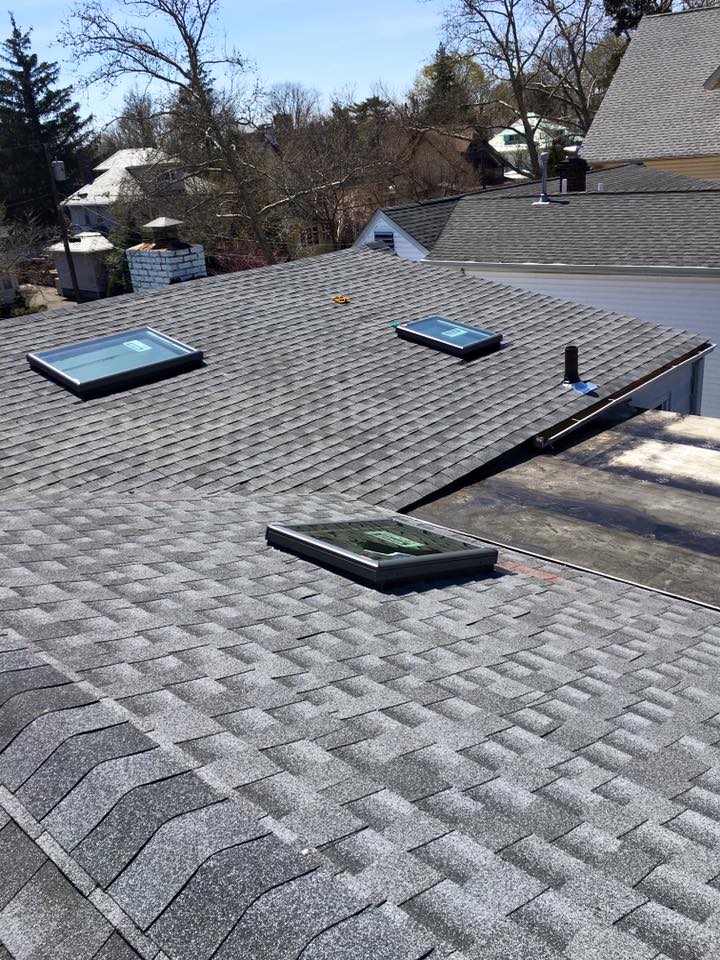
Look up at the photo above and you’ll see exactly what a well-planned roof looks like from the inside out: three skylights spaced across a large gray asphalt shingle roof, each one carefully flashed and sealed into place before the shingles were laid around it. This is what professional skylight installation looks like when it’s done right — not an afterthought bolted onto an existing roof, but a feature planned into the roofing system itself.
Homeowners across New Jersey are increasingly adding skylights during roof replacements, additions, and attic conversions, and for good reason. Natural light changes how a room feels, cuts down on daytime lighting costs, and can genuinely increase a home’s resale value. But skylights are also one of the most common sources of roof leaks when they’re installed poorly, which makes the choice of contractor just as important as the choice of skylight itself.
This guide covers what skylight installation actually involves, the six real benefits it brings to a New Jersey home, what it costs, and how to make sure yours is done in a way that won’t come back to haunt you during the next rainstorm.
What Does Professional Skylight Installation Involve?
Skylight installation is more involved than cutting a hole and dropping in a window. A proper installation requires:
- Structural assessment of the roof and attic to determine the best placement between rafters.
- Precise cutting of the roof deck to match the skylight’s exact dimensions.
- Step flashing and counter-flashing around all four sides of the unit, layered correctly with the surrounding shingles — the same principle you can see protecting the chimney base in many roof photos, applied here around a window instead.
- Insulation and sealing to prevent condensation and heat loss around the frame.
- Interior finishing, including a light shaft or well that channels daylight down into the living space below.
Every one of these steps matters. Skip the flashing detail or seal it incorrectly, and even the best skylight on the market will eventually leak.
Why Skylight Installation Is Different From a Standard Window
Unlike a wall-mounted window, a roof skylight sits directly in the path of rain, snow, and ice — which is exactly why New Jersey’s freeze-thaw winters make correct flashing and sealing so critical during skylight installation.
6 Benefits of Skylight Installation
1. Natural Light Throughout the Day
The most obvious benefit — a well-placed skylight can flood a room with daylight that no number of lamps can replicate, especially in interior rooms or hallways with no exterior walls.
2. Lower Energy Costs
Daylighting a room reduces how much you rely on artificial lighting during the day, and many modern skylight units are also designed with energy-efficient glazing that helps regulate indoor temperature.
3. Improved Ventilation
Vented skylights can be opened to let warm air escape in summer, working alongside your home’s existing attic ventilation to keep upper floors more comfortable.
4. Increased Home Value
Well-executed skylight installation is often cited by real estate professionals as a feature that improves a home’s perceived value and helps rooms — especially finished attics and dormers — feel larger and brighter.
5. A More Inviting Living Space
Rooms with skylights simply feel different. Natural overhead light creates a sense of openness that’s hard to achieve with standard windows alone, particularly in kitchens, bathrooms, and stairwells.
6. Reduced Mold and Moisture Buildup
In rooms prone to humidity, like bathrooms, a vented skylight helps moist air escape rather than settling and contributing to mold growth over time.
Types of Skylights to Choose From
Not every skylight is the same, and part of professional skylight installation is helping homeowners choose the right type for their specific space:
- Fixed skylights — sealed units that don’t open, ideal for pure daylighting in spaces where ventilation isn’t a priority.
- Vented skylights — can be opened manually or electronically to let air circulate, popular in kitchens and bathrooms.
- Tubular skylights — smaller, more affordable units that channel light through a reflective tube, well suited to smaller rooms like closets or hallways.
- Custom skylights — larger or uniquely shaped units designed for specific architectural features, such as vaulted ceilings.
How Much Does Skylight Installation Cost in NJ?
The cost of skylight installation depends on a few key factors:
- Skylight type and size — tubular units are generally the least expensive, while large custom or vented skylights cost more.
- Roof structure — installations that require cutting through rafters or reinforcing the roof deck take more labor.
- Number of skylights — as shown in the roof above, some homes install multiple skylights at once, which can be more cost-effective per unit than doing them separately.
- Interior finishing — the light shaft, drywall, and trim work inside the home add to the total cost.
- Timing — installing during a full roof replacement is often more economical than adding a skylight to an existing roof later, since the roofing crew is already on-site with materials and equipment.
A free, in-home estimate remains the most reliable way to get an accurate number, since roof pitch, attic access, and skylight placement all affect the final price.
Why Skylight Installation Should Happen During a Roof Replacement
If you’re already planning a roof replacement, it’s worth considering skylight installation at the same time. There are a few practical reasons for this:
- Shared labor and materials. The roofing crew is already removing shingles and accessing the deck, which reduces the incremental cost of cutting in a skylight opening.
- Better flashing integration. Flashing installed as part of a full roof system typically performs better than flashing retrofitted around an existing roof.
- One warranty, one contractor. Coordinating skylight and roofing work under a single project avoids the finger-pointing that can happen when two separate contractors handle roof and skylight work independently.
- Less disruption overall. One project means one round of scaffolding, one cleanup, and one timeline rather than two separate disruptions to your home.
Common Skylight Installation Mistakes to Avoid
Because skylights combine roofing, carpentry, and interior finishing, mistakes tend to show up months or years after installation, usually as leaks. The most common issues include:
- Improper flashing sequencing, where shingles aren’t layered correctly around the skylight frame.
- Inadequate insulation, leading to condensation that drips down the light shaft and mimics a roof leak.
- Incorrect sizing, where a skylight is too large for the rafter spacing, weakening the roof structure.
- Skipping a structural assessment, resulting in a skylight placed where it interferes with plumbing vents, ductwork, or electrical runs in the attic.
According to the U.S. Department of Energy, proper installation and glazing selection have a significant impact on how much a skylight helps — or hurts — a home’s overall energy efficiency, which is a strong argument for hiring a contractor experienced specifically in skylight installation rather than a general handyman.
Choosing the Right Skylight Installation Contractor
Since a poorly installed skylight is one of the most common causes of roof leaks, choosing the right contractor matters more here than with almost any other roofing project. Look for:
- Combined roofing and skylight experience, since the two are inseparable from an installation standpoint.
- Manufacturer-trained installers, familiar with the flashing kits and specifications of leading skylight brands like VELUX.
- Licensing and insurance, which protects you if anything goes wrong during the roof-cutting process.
- A written estimate that includes interior finishing, not just the exterior installation, so there are no surprises once the light shaft and drywall work begins.
At American Roofing Pros, our team handles skylight installation as part of our full roofing services, which means the same licensed, GAF-certified crew handling your roof replacement or roof installation is the one cutting in and flashing your skylights — with proper attic venting factored in from the start.
Frequently Asked Questions About Skylight Installation
How long does skylight installation typically take?
A single skylight can often be installed in a day, while installing multiple skylights — like the three shown in the photo above — as part of a larger roofing project may take longer depending on the overall scope of work.
Can skylights be added to any type of roof?
Most sloped asphalt shingle roofs are good candidates for skylight installation, though rafter spacing, roof pitch, and attic layout all factor into where and how many skylights can be placed.
Do skylights increase the risk of roof leaks?
Only when they’re installed incorrectly. Properly flashed and sealed skylights, installed by an experienced crew, perform just as reliably as the rest of the roof.
Is skylight installation covered under my roof warranty?
This depends on your roofing contractor and manufacturer. Installing skylights as part of a full roof replacement, under one contractor, typically keeps warranty coverage simpler and more comprehensive.
Schedule Your Free Skylight Installation Estimate
Whether you’re planning a full roof replacement or simply want to bring more natural light into your home, professional skylight installation is one of those upgrades that pays off in comfort and value for years afterward — as long as it’s done correctly the first time.
American Roofing Pros has installed skylights across New Jersey, including in Buena etc. Visit our skylight installation page to learn more, or schedule your free estimate today.