A properly maintained roof does much more than improve the appearance of a property. It forms an important part of the building envelope, helping protect the interior from rain, wind, snow, moisture, and changing weather conditions. When roofing materials begin to deteriorate or individual components develop problems, timely roof repair can help address those conditions before they become more extensive.
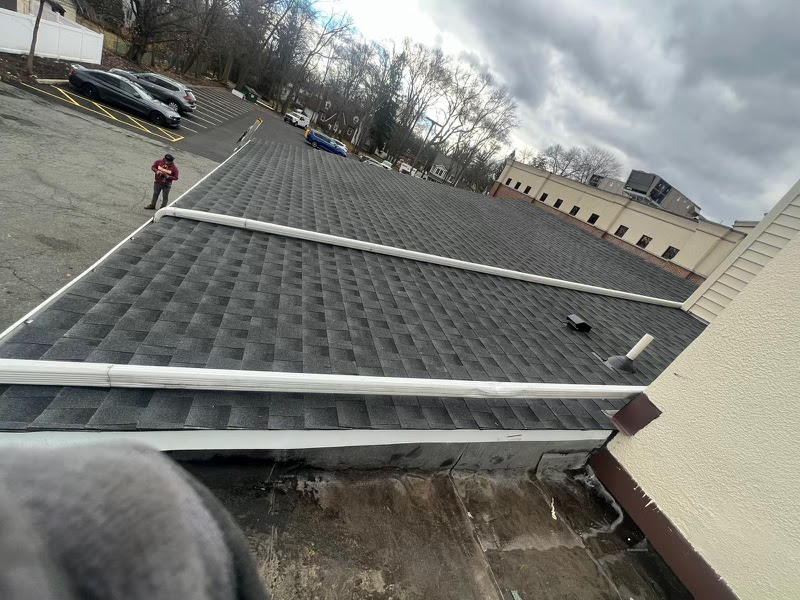
The photograph featured in this article provides a clear example of why roofing should be evaluated as a complete system rather than by looking at shingles alone. The image shows a large asphalt shingle roof with several connected roof sections, white gutter and drainage components, roof penetrations, wall-to-roof transitions, and a lower roof surface that shows visible weathering and deterioration.
These details all deserve attention during a professional evaluation.
A roof can have shingles that appear relatively uniform while other areas of the same property require maintenance or repair. Flashing, drainage, roof edges, penetrations, and transitions can all influence how effectively rainwater is managed.
American Roofing Pros NJ provides roofing services including roof repair, roof replacement, roof installation, roof inspection, emergency roofing, and roof damage repair. Its website describes a process that begins with an inspection and estimate before the appropriate roofing work is performed.
Understanding What the Photo Shows
The photograph captures a roof from an elevated perspective, making several important roofing details easy to see.
The main roof surface is covered with dark asphalt shingles arranged across multiple roof planes. White gutter sections run along portions of the roof, while several penetrations are visible through the shingle surface.
There is also a lower section where the roofing material is different from the main shingle field. That area appears more weathered and shows visible surface deterioration.
This difference is important.
A property does not always have one identical roofing surface across every section. Additions, lower roof areas, previous repairs, drainage configurations, and different construction periods can result in multiple roofing assemblies on the same building.
A professional roof repair evaluation should therefore consider each section individually.
The condition of the shingles is only one part of the assessment. The contractor should also consider how the roof drains, how different roof planes connect, how the roof meets exterior walls, and how penetrations are sealed and flashed.
The U.S. Environmental Protection Agency’s moisture-control guidance specifically identifies roof edges, roof intersections, penetrations, gutters, drainage components, and flashing as areas that require attention when maintaining moisture control.
That approach is especially relevant to a roof like the one shown in this photograph, where several different components meet within a relatively small area.
Why Roof Repair Should Address the Entire System
When homeowners hear the term roof repair, they may immediately think about replacing a few missing shingles.
Shingles are certainly important, but they are not the only part of a roofing system.
A roof also includes the deck beneath the roofing materials, underlayment, flashing, drainage components, ventilation elements, penetrations, edges, and connections to other building surfaces.
A problem in one component can sometimes affect another.
For example, a damaged flashing detail can allow water to enter around a roof-wall transition. A drainage problem can expose roofing materials to prolonged moisture. A damaged shingle can allow water to reach the layers beneath it.
This is why professional roof work should begin with identifying the source and extent of the problem.
The National Roofing Contractors Association’s educational material describes roof assembly functions that include slope and drainage, roof decks, insulation, vapor control, and flashing. It also provides training resources covering inspection, leak investigation, and repair of asphalt shingle systems.
A good roof repair is therefore not simply about making a visible defect disappear.
It is about understanding why the defect occurred and determining which part of the system needs attention.
Examining the Asphalt Shingles
The main roof in the photograph is covered with asphalt shingles.
During a professional roof repair evaluation, shingles should be checked for visible damage and deterioration.
Depending on the roof’s age and condition, an inspection may identify missing shingles, cracked shingles, lifted edges, damaged areas, excessive wear, or other visible defects.
The location of the damage also matters.
A single damaged shingle in an otherwise well-maintained roof is different from widespread deterioration across multiple roof planes.
The surrounding shingles should also be evaluated because water does not necessarily remain confined to the exact location where a defect is visible.
American Roofing Pros NJ lists missing, cracked, and curling shingles among common roofing issues that can require repair.
A professional contractor should also consider whether previous repairs are present.
Older patches, sealants, replacement shingles, or modified flashing can provide useful information about the roof’s history.
The goal is to understand the current condition of the roofing system before recommending a solution.
A homeowner should receive a clear explanation of what has been observed and why a particular repair is being recommended.
Flashing and Roof-Wall Transitions
One of the most important areas visible in the photograph is where the roof meets vertical surfaces.
These locations deserve careful attention because they represent transitions between different building materials.
Flashing helps manage water at these connections.
The EPA explains that roof intersections with taller adjoining walls require appropriate flashing to maintain continuity of the drainage plane. Its guidance also identifies roof edges, chimneys, plumbing vents, skylights, and other penetrations as locations where water-management details are important.
The National Roofing Contractors Association similarly explains the role of step flashing where asphalt shingles meet a side wall or penetration. Step flashing is designed to divert water toward the exterior rather than allowing it to move behind the wall covering.
This makes flashing a major consideration during roof repair.
A leak near a wall does not necessarily mean that the shingles themselves are the problem.
The source may be a flashing detail, an open joint, a damaged seal, or another transition.
Professional leak investigation therefore requires more than looking directly above an interior water stain.
Water can travel along building components before becoming visible inside.
Gutters and Drainage Matter
The white gutters visible across the roof are another important part of the photograph.
Gutters are designed to collect and direct rainwater away from the roof edges and toward appropriate discharge points.
When drainage components become blocked, loose, damaged, or improperly connected, water management can be affected.
The EPA recommends inspecting gutters and downspouts for loose or missing fasteners, loose joints, corrosion, debris, and blockages. It also recommends checking roof drains, scuppers, and outlets where applicable.
During a roof repair assessment, drainage should therefore be considered alongside the roofing materials.
The roof shown in the photograph has several connected sections, meaning water may move across different planes before reaching the gutter system.
That makes proper drainage especially important.
Standing water or repeated moisture exposure can contribute to deterioration in certain roofing materials.
The NRCA states that roofs should be designed and constructed to provide positive drainage because ponding water can be detrimental to roof systems.
A professional roofing contractor can evaluate visible drainage conditions and determine whether gutter or roof-related repairs are appropriate.
Roof Penetrations Require Careful Attention
The photograph also shows roof penetrations extending through the shingle surface.
These components can include vents, pipes, exhaust elements, or other equipment depending on the property.
Whenever something passes through a roof, the surrounding area requires appropriate weatherproofing and flashing.
A penetration creates a break in the otherwise continuous roof surface.
The roofing system has to manage water around that opening.
During roof repair, a contractor should examine the surrounding shingles, flashing, seals, and visible connections.
The EPA includes plumbing vents, skylights, roof hatches, exhaust equipment, and other penetrations among the areas where continuity of rainwater protection needs to be maintained.
This is one reason a complete roof evaluation is more useful than simply replacing damaged shingles.
A new shingle will not correct a flashing problem around a pipe or vent.
Likewise, sealing one visible point without identifying the actual source of moisture may only provide a temporary solution.
The repair should address the underlying roofing detail whenever the condition can be properly identified.
The Lower Roof Area Deserves Attention
The lower portion of the photograph is particularly interesting because its surface differs from the main shingle roof.
It shows a darker, weathered surface with visible marks and deterioration.
A photograph cannot determine the exact cause of that condition.
It could be associated with age, previous work, weather exposure, drainage, moisture, material deterioration, or other factors.
That is why a professional evaluation is necessary before making a specific diagnosis.
However, the visible difference demonstrates why a roof repair inspection should cover every roof section rather than focusing only on the largest or most attractive area.
Lower roof sections can receive water from upper roof planes.
They may also have different slopes and different drainage requirements.
Where two roofing systems meet, the transition between them needs to be properly detailed.
The EPA’s moisture-control guidance emphasizes continuity at roof intersections, edges, flashing, and drainage areas.
A contractor evaluating this type of roof should pay close attention to those connections.
Repair or Replacement?
One of the most important questions homeowners have is whether a damaged roof needs roof repair or complete replacement.
There is no universal answer.
The appropriate solution depends on the condition of the roofing system, the extent of the damage, the age and remaining serviceability of the materials, previous repairs, and other project-specific factors.
A localized problem may be suitable for repair.
Widespread deterioration may lead a contractor to discuss replacement.
American Roofing Pros NJ offers both roof repair and roof replacement services, allowing the recommended scope to reflect the condition identified during the inspection.
The photograph alone should not be used to determine that this particular roof needs replacement.
It provides visual information about the roof’s condition, but it cannot reveal every underlying issue.
An on-site evaluation is needed to inspect areas that cannot be seen in a photograph.
This distinction is important because responsible roofing recommendations should be based on actual conditions rather than assumptions.
When Professional Roof Repair Makes Sense
Professional roof repair can be appropriate when the problem is localized and the surrounding roofing system remains serviceable.
Examples may include damaged shingles, certain flashing problems, localized leaks, or specific areas of weather-related damage.
Repair work can sometimes extend the useful service life of a roofing system while addressing the immediate problem.
However, the repair should be based on a proper diagnosis.
If a leak keeps returning after several repairs, the underlying source may not have been fully addressed.
A professional inspection can help determine whether the problem is related to the roof covering, flashing, drainage, penetrations, or another component.
American Roofing Pros NJ describes its roofing process as beginning with a free inspection and estimate, followed by professional installation and a final inspection and cleanup.
This process helps create a clear connection between the observed condition and the recommended work.
The Importance of Professional Workmanship
Quality roofing work depends on attention to detail.
The photograph provides a good example of how many different elements can exist on one roof.
There are shingles, gutters, roof penetrations, wall connections, multiple roof planes, and a lower roof section.
Each component has a role.
Each connection needs to work with the surrounding components.
Professional workmanship means taking the time to evaluate those relationships.
It also means following appropriate installation practices and manufacturer requirements for the roofing materials being used.
The EPA recommends developing inspection and maintenance procedures for roof assemblies and specifically calls attention to roofing, flashing, drainage, penetrations, roof edges, valleys, and other vulnerable locations.
A professional roof repair should therefore focus on the complete condition rather than only the easiest visible defect.
Protecting the Roof After Repairs
Roof maintenance should not stop immediately after a repair is completed.
Regular observation can help identify new issues before they develop into larger problems.
Homeowners should watch for visible shingle damage, damaged flashing, blocked gutters, debris accumulation, and signs of moisture.
The EPA recommends periodic roof inspections and additional inspections following heavy winds or rain. Its guidance also recommends checking roofing materials, flashings, drainage systems, penetrations, and areas where moisture may enter.
After significant weather, a professional roof repair inspection can be useful even when no interior leak is immediately visible.
Storms can loosen shingles, damage flashing, move debris, or affect drainage components.
Some problems may remain outside the building for a period of time before they become visible indoors.
Early attention can give homeowners more options when deciding how to address a roofing problem.
American Roofing Pros NJ Roofing Services
American Roofing Pros NJ provides roofing services for residential and commercial properties, including roof repair, roof replacement, roof installation, roof inspection, emergency roofing, and roof damage repair.
The company’s website describes its roofing process around inspection, estimating, professional installation, and final quality checks.
For a property owner dealing with a leak, damaged shingles, flashing concerns, or visible roof deterioration, starting with a professional evaluation can help clarify the condition of the roof.
The company also provides emergency roofing services for urgent situations involving roof damage and active leaks.
For additional information, you can link naturally within the article to the company’s relevant pages:
Roof Repair — for information about repairing leaks, shingles, flashing, and other roofing issues.
Roof Inspection — for information about professional roof evaluations.
Roof Replacement — for properties where broader roofing work may be required.
Emergency Roofing — for urgent roofing problems requiring prompt attention.
The company also maintains an Our Work section where additional roofing project photographs can be viewed.
These internal links help readers move from educational information to the specific service that matches their situation.
Final Thoughts on Roof Repair
The photograph shows why a roofing system should never be evaluated by shingles alone.
The main shingle surface is only one part of the roof.
Gutters, drainage, roof edges, penetrations, flashing, wall transitions, and lower roof sections all contribute to how the system handles weather.
A professional roof repair evaluation considers these components together.
The visible condition of the lower roof area, the multiple roof sections, the drainage components, and the roof penetrations all demonstrate why careful inspection matters.
The EPA’s moisture-control guidance emphasizes that roofing, flashing, drainage, roof edges, intersections, and penetrations are important parts of maintaining protection against moisture.
For homeowners, the most useful approach is to address roofing concerns based on an actual evaluation rather than waiting for a small problem to become a major leak.
Whether the appropriate solution is a localized roof repair, maintenance, or a larger roofing project depends on the condition of the system.
American Roofing Pros NJ provides professional roofing services and offers a free inspection and estimate through its website.